A missing transition fitting, valve trim package, or approved fixture can turn a clean installation schedule into lost labor and a stalled inspection. This plumbing material takeoff guide is built for commercial teams that need more than a rough count. It explains how to translate drawings, specifications, addenda, and project requirements into an order that can be bought, approved, staged, and installed.
A material takeoff is not simply a list of pipe and fixtures. On commercial work, it is a procurement control document. It should identify what is required, where it is used, which items need approval, what must arrive early, and where substitutions are not acceptable. The quality of that document affects field productivity long before the first delivery reaches the jobsite.
Start With a Complete, Current Bid Package
Takeoffs fail when they begin from an incomplete drawing set. Before counting material, confirm the issue date of the plans and specifications, review all addenda, and identify bulletins or owner revisions that affect plumbing scope. A fixture schedule may have changed while the floor plans remained unchanged. A revised specification may call for a different pipe joining method, water heater voltage, or drinking fountain configuration.
Organize the documents by discipline and source: plumbing drawings, architectural plans, mechanical drawings, electrical requirements, fixture schedules, equipment schedules, specifications, and general conditions. This matters because the plumbing drawings do not always show every requirement. Electrical drawings can establish voltage and circuit requirements for instantaneous water heaters, bottle-filling stations, and hand dryers. Architectural elevations can show mounting heights, accessible clearances, and carrier needs that are not obvious on a plan view.
For government and Milcon work, also identify submittal requirements, approved manufacturers, Buy American or other procurement provisions, and required certifications at the start. A product that fits physically but lacks required documentation can still stop procurement.
Build the Takeoff by System, Not by Page
Counting every item sheet by sheet often creates duplicates and gaps. A more reliable approach is to build separate takeoff sections for each plumbing system, then reconcile those sections against the drawings. Typical sections include domestic cold water, domestic hot water, sanitary waste and vent, storm drainage, equipment connections, roof drains, and plumbing fixtures.
Within each system, separate material into practical purchasing groups. Pipe, fittings, valves, supports, insulation interfaces, fixture trim, rough-in components, and accessories should not be blended into one undifferentiated count. A piping quantity may be correct while the installation still stops because the crew does not have escutcheons, trap primers, stops, carriers, cleanout covers, vacuum breakers, or connection kits.
For repetitive work, such as modular units, dormitory rooms, public washrooms, or multifamily floors, establish a verified typical-area kit. Count one complete assembly, compare it to the drawings and specifications, then multiply it by the number of identical units. Mark exceptions separately. This is faster than recounting every room, but only after the typical assembly has been checked carefully.
Measure Pipe Runs With Installation Reality in Mind
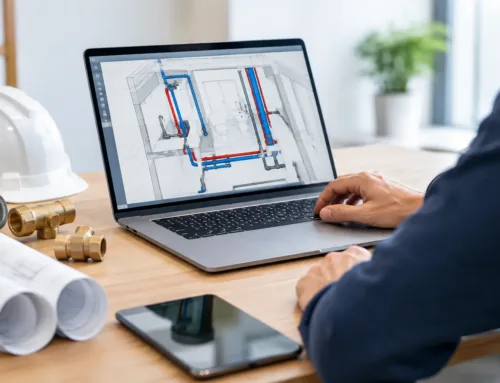
Pipe measurements from plan drawings are a starting point, not a final purchasing quantity. Account for vertical risers, offsets, branches, changes in elevation, connections at equipment, and routing around structural conditions. Isometric drawings, when available, are especially useful for checking riser lengths and fitting locations.
Do not assume a straight-line plan measurement equals the installed footage. Add measured lengths by size and material, then identify the fittings required by direction changes and branches. The right allowance depends on the system and project conditions. A repetitive, prefabricated assembly may need little contingency once proven. A renovation above an occupied ceiling may require a larger allowance because field routing can change quickly.
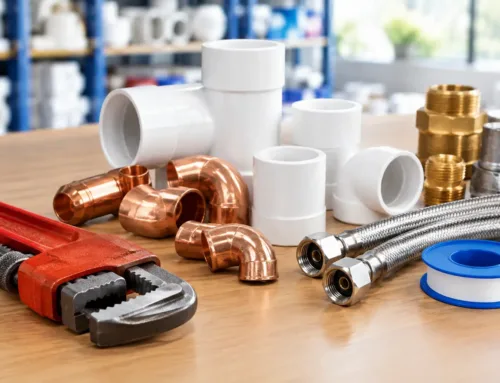
Keep copper tubing, fittings, and valves separated by type and size. Copper tube type, joining method, valve end connection, pressure rating, and lead-free requirements must align with the specification. Treat these as distinct materials, not interchangeable descriptions.
Read the Specifications Before Releasing Material
The drawings show location and quantity. The specifications often determine exactly what can be installed. A takeoff should capture each requirement that affects purchasing, approval, or compatibility.
For fixtures and equipment, record the manufacturer and model basis, acceptable alternates, finish, mounting method, rough-in dimensions, electrical data, flow rate, accessibility requirements, and accessories. A wall-hung lavatory, for example, may require a carrier, concealed arm supports, faucet, drain, trap, supply stops, insulation cover, and an ADA-compliant configuration. Counting the fixture alone does not create an installable package.
Drinking fountains and bottle-filling coolers need the same attention. Identify refrigerated versus non-refrigerated units, indoor or outdoor use, filtration requirements, bottle counter features, power needs, mounting frames, and whether an accessible high-low arrangement is required. Hand dryers, electric water heaters, and specialty fixtures must be checked against electrical drawings and available site power before ordering.
Capture Submittal Data Alongside Each Line Item
A useful takeoff does more than list quantity and description. Include the data that allows the purchasing team to move without reopening every document. For each major line item, capture the specified manufacturer, model number, approved alternate status, finish or option code, quantity, drawing reference, specification section, lead time, and submittal status.
This is particularly valuable on public-sector projects. A product may be readily available, but it should not be released if it has not cleared the approval process or if its documentation does not meet the contract requirement. Clarke Plumbing Specialties supports project-specific submittal and approval processing because that information is part of getting material to the field on time, not an administrative afterthought.
Check the Interfaces That Create Most Jobsite Problems
The most expensive omissions are frequently found at the connection points between systems, trades, and supplied assemblies. Before finalizing the takeoff, review each equipment connection from the source to the termination. Ask what the equipment requires, what the plumbing contractor supplies, what another trade supplies, and what is included by the manufacturer.
Pay close attention to fixture carriers, trim, rough-in valves, mixing valves, tempering valves, service stops, shutoffs, unions, dielectric transitions, drain assemblies, traps, cleanouts, and pressure-regulating components. Confirm whether a water heater package includes relief valves, expansion tanks, recirculation connections, control accessories, and installation hardware. Specifications and manufacturer literature can assign these items differently from one project to the next.
A practical pre-release review should verify at least these six areas:
- Fixture schedule quantities against room plans and elevations
- Pipe sizes and materials against specifications and riser diagrams
- Required fittings, valves, supports, and connection accessories
- Electrical requirements for powered plumbing equipment
- Accessibility, mounting, and finish requirements
- Submittal, certification, and approved-manufacturer status
This review works best when the estimator, project manager, field lead, and supplier can resolve open questions before material is committed. The goal is not to delay buying. It is to avoid buying quickly and correcting slowly.
Plan Purchases Around Sequence and Lead Time
A complete takeoff can still create a schedule problem if every item is treated as equally urgent. Divide the material list by installation sequence and procurement risk. Long-lead equipment, approved specialty fixtures, custom finishes, carrier systems, and items requiring submittal approval should be identified first. Commodity pipe and fittings may be easier to replenish, but that depends on size, material, regional availability, and the project’s delivery requirements.
Release material in workable phases when storage, theft exposure, or site congestion is a concern. For a large commercial project, this may mean ordering underground materials, overhead rough-in, in-wall rough-in, fixture carriers, finish trim, and equipment on separate schedules. For a modular manufacturer, it may mean establishing recurring releases tied to the production line rather than shipping a full project order at once.
Maintain a live variance log after the initial takeoff. Record drawing changes, field discoveries, approved substitutions, backordered items, and quantities released. A takeoff is a controlled working document through the project, not a spreadsheet that disappears after the purchase order is issued.
The strongest material takeoff gives the field a complete installation path and gives procurement a clear basis for action. When questions are resolved before release, documentation is matched to the requirement, and supply is sequenced around the work, crews spend more time installing and less time waiting for one overlooked component.