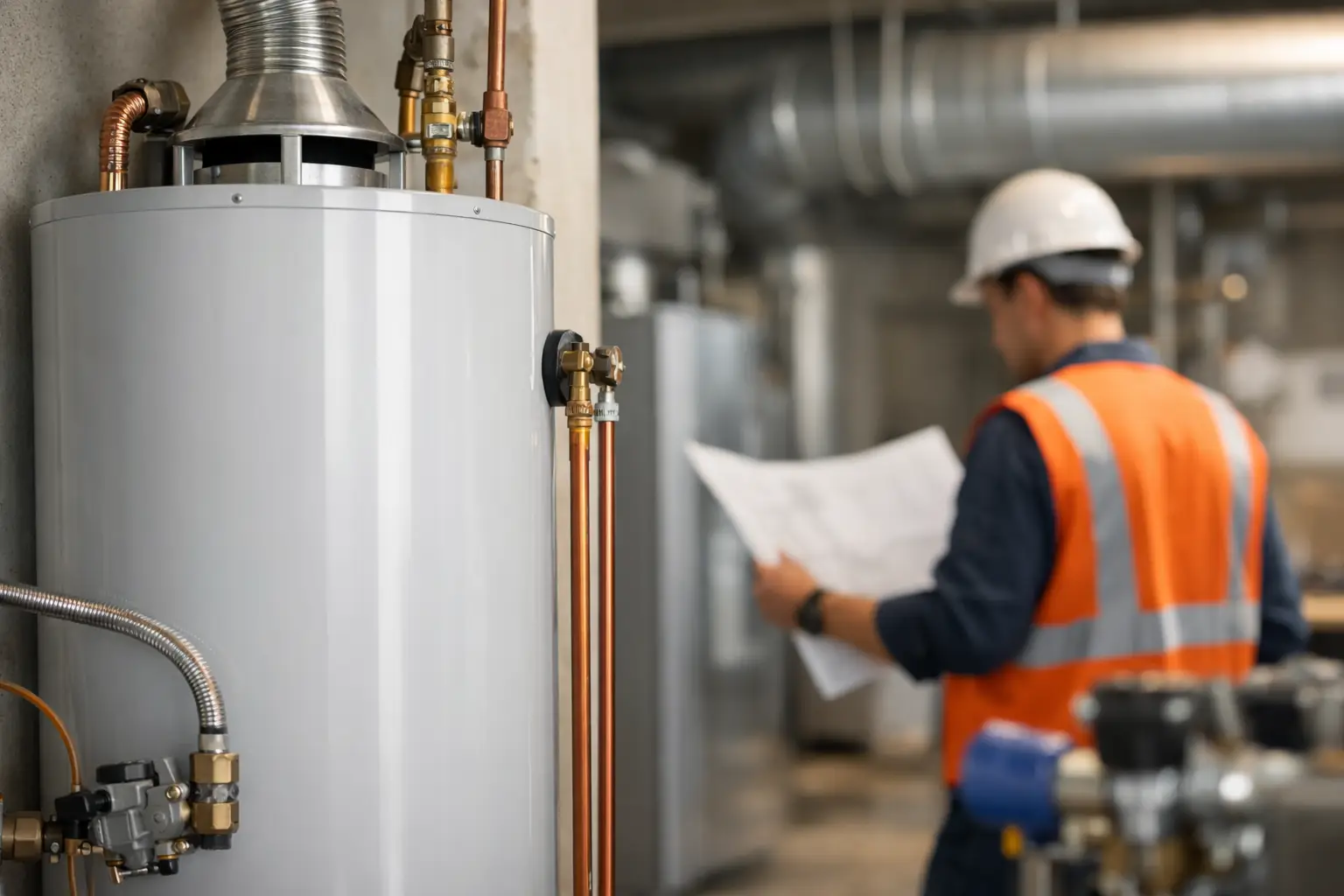
A water heater can match the scheduled capacity, fuel type, and recovery rate and still fail a plan review or inspection. In regulated air-quality areas, ultra low NOx water heater requirements are a separate compliance issue that must be verified before a unit is released for a commercial, institutional, modular, or government project. Treating NOx compliance as a last-minute substitution question can leave a contractor with equipment that cannot be installed or approved.
Where Ultra Low NOx Water Heater Requirements Apply
There is no single nationwide ultra low NOx standard that applies to every gas-fired water heater installation. Requirements are commonly driven by state rules, regional air-quality districts, local ordinances, adopted energy codes, project specifications, and the authority having jurisdiction (AHJ). California air districts are the most familiar example, but other jurisdictions may impose their own emission limits or product restrictions.
The project location matters as much as the equipment location. A contractor working across multiple counties or states should not assume that an approved unit on one job is acceptable on another. A manufacturer may offer a standard low-NOx model, an ultra-low-NOx model, and a commercial model with a different emissions certification. The product name alone does not establish compliance.
For procurement teams, the first question is straightforward: what rule governs the installation address? Confirm this before selecting a manufacturer or asking for an equivalent. The second question is equally important: does the rule apply to the specific equipment category, input range, and application? Storage water heaters, tankless water heaters, boilers, and water-heating boilers can fall under different definitions and limits.
What “ultra low NOx” actually means
NOx refers to nitrogen oxides created during combustion. These emissions are regulated because they contribute to smog formation and regional air-quality problems. An ultra-low-NOx water heater uses burner and combustion-system design to reduce those emissions while maintaining required hot-water output.
Many product listings reference emissions in nanograms per joule of heat output, commonly written as ng/J. A 10 ng/J rating is frequently associated with ultra-low-NOx residential-type gas water heaters in certain California markets, but that number should never be used as a universal commercial requirement. Local rules may use a different limit, define equipment differently, or apply requirements based on BTU input, installation date, or whether a unit is new, replaced, or relocated.
Replacement work can trigger the requirement
A like-for-like replacement is not always exempt from current emissions rules. If a failed atmospheric unit is being replaced in a regulated jurisdiction, the replacement may need to meet the current ultra-low-NOx limit even if the original equipment predates the rule. That can affect availability, venting, combustion air, gas piping, electrical needs, and installation labor.
Before ordering, confirm whether the project is a repair, replacement, alteration, tenant improvement, or new construction. The permit scope and AHJ interpretation can determine which code cycle and air-quality rule apply.
Specify More Than the Emissions Rating
A compliant NOx rating is only one line item in a successful water-heater selection. Commercial buyers need to verify the full operating and installation profile. A unit that meets the emission limit but misses recovery demand or venting constraints still creates a field problem.
Start with the scheduled equipment type: storage, tankless, condensing, non-condensing, or a dedicated water-heating boiler. Then confirm fuel, input capacity, storage volume where applicable, first-hour or recovery performance, temperature range, electrical characteristics, and approved venting method. The building load calculation and fixture demand should remain the basis for capacity selection. Lower-emission equipment is not a substitute for properly sized equipment.
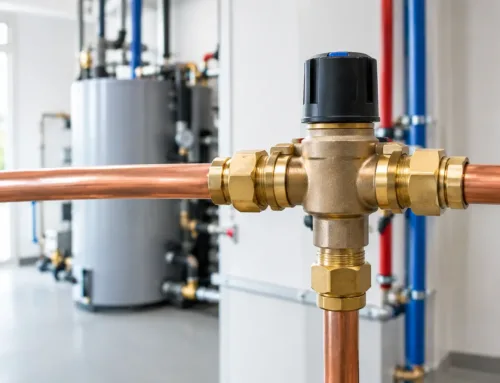
For commercial and institutional work, also verify whether the heater serves domestic hot water only or is part of a broader system with storage tanks, recirculation, mixing valves, pumps, building automation controls, and redundancy requirements. A high-demand locker room, school kitchen, barracks facility, or modular production line may have load patterns that make recovery rate and standby capacity more critical than nominal tank size.
Match the certification to the scheduled unit
The manufacturer submittal should show the exact model number, not just a product family. Confirm the listed input rating and the emissions certification associated with that model. If a project specification calls for ultra-low NOx, provide the manufacturer documentation that demonstrates the required emissions level and the applicable standard or agency certification.
Do not rely on a distributor description, an old catalog page, or a similar model’s data sheet. Manufacturers revise product platforms, model suffixes, ignition systems, and certification listings. A small change in model number can affect the approved vent category, efficiency rating, emissions designation, or available voltage.
When an alternate is proposed, compare the alternate line by line against the basis of design. Include capacity, recovery, efficiency, dimensions, service clearances, venting, electrical requirements, warranty terms, emissions documentation, and any controls needed for the system. An alternate that reduces lead time but requires a new vent route or condensate drain may not protect the schedule.
Account for installation impacts early
Ultra-low-NOx water heaters may be atmospheric, power-vented, direct-vent, or condensing depending on the product design and application. Each configuration brings different field requirements. Vent material, vent length, termination location, combustion-air provisions, condensate management, roof penetrations, and electrical power should be reviewed before equipment arrives.
Condensing equipment can improve thermal efficiency and may offer strong commercial performance, but it requires a plan for acidic condensate. Depending on local code and facility requirements, that may include a neutralizer, drain connection, maintenance access, and freeze protection. High-efficiency equipment can also have tighter venting rules and more specific factory-approved accessory requirements.
Mechanical rooms deserve an early site check. Verify equipment dimensions, service access, floor loading, door openings, seismic restraints where required, gas pressure, shutoff locations, T&P relief discharge routing, drain pan requirements, and access for future replacement. The compliant heater must also be installable and maintainable in the space provided.
Build a Submittal Package That Supports Approval
For public-sector and Milcon work, product approval is rarely a one-page exercise. The water-heater submittal should be organized so reviewers can quickly confirm that the proposed equipment meets the schedule, project specification, code requirements, and local emissions rule.
A complete package generally includes the manufacturer cut sheet, model-specific performance data, installation instructions, venting information, emissions certification or compliance documentation, electrical data, warranty information, and any required accessory data. If the unit requires a vent kit, condensate neutralizer, stands, seismic components, expansion tank, mixing valve, or control package, show those items clearly. Missing accessories are a common source of delayed approvals and incomplete field installations.
For government buyers, confirm any project-specific requirements for approved manufacturers, domestic sourcing, documentation format, testing agency listings, and substitution procedures. The phrase ultra low NOx does not override the rest of the specification. If the project calls for a particular listing, efficiency threshold, heat-exchanger material, control sequence, or warranty, the selected unit must meet those requirements as well.
Keep the documentation current. A submittal assembled from outdated PDFs can create unnecessary questions when model data or certifications have changed. Accurate manufacturer data protects the contractor, the reviewer, and the facility team that will operate the equipment after turnover.
Procurement Checks Before Releasing Equipment
Water heaters are schedule-sensitive equipment, especially when a project needs a specific fuel, capacity, vent arrangement, and emissions designation. Availability can narrow quickly when a local rule restricts the acceptable product pool. The best time to identify a supply issue is before the approved submittal becomes a jobsite emergency.
Before release, verify the exact model number, approved accessories, shipping configuration, lead time, receiving constraints, and damage-inspection procedure. Confirm whether venting and condensate components ship separately. If the project uses multiple heaters, confirm that all units carry the same required certification and that the sequence of operation supports the specified redundancy.
For modular manufacturers and repeat production environments, standardizing on an approved ultra-low-NOx configuration can reduce rework, but only when the configuration is valid for each destination jurisdiction. A model that works for one market may require a different certified option for another. Maintain a project matrix that tracks destination, AHJ, fuel type, emissions requirement, model number, vent configuration, and approved submittal revision.
Clarke Plumbing Specialties supports this process with product sourcing and project documentation built for buyers who cannot afford to discover a compliance gap after material is staged or installed.
Ask These Questions Before the Purchase Order
Before committing to a gas-fired water heater, confirm the installation jurisdiction and governing emissions rule; the exact model’s NOx documentation; the scheduled capacity and recovery requirement; the required venting and condensate arrangement; and all accessories needed for a complete installation. Also confirm that the submitted model matches the approved model, rather than assuming an available substitute is equivalent.
The practical goal is not simply to buy an ultra-low-NOx heater. It is to put an approved, correctly sized, fully documented unit in the mechanical room with every required component on hand. That is what keeps inspections moving and protects the construction schedule.