A commercial shower that will not hold temperature, shuts off slowly, leaks behind the wall, or fails a safety inspection is rarely a simple fixture issue. The correct commercial shower valve replacement parts depend on the installed valve body, manufacturer series, service conditions, and the requirements of the facility. Ordering by appearance alone can turn a one-hour repair into a return visit, an open-wall issue, or a delayed turnover.
For contractors, facility teams, and project buyers, the objective is not just to find a part that looks close. It is to identify a compatible, approved component that restores operation without creating a code, documentation, or schedule problem.
Start With the Valve, Not the Handle
A handle, escutcheon, or showerhead may be the visible failure point, but the repair usually begins with the rough-in valve. Commercial installations commonly use pressure-balancing, thermostatic, metering, or combination tempering valves. Each design has different internal service components and different compatibility limits.
Before requesting material, confirm the valve manufacturer, model or series, approximate installation date, and the type of application. A gang shower in a correctional facility, a patient bathing area, a school locker room, and an accessible shower room may all use different valve configurations even when the trim appears similar.
The most useful field information is often found on the valve body, behind the trim plate, or in existing closeout documents. A clear photo of cast markings, stem geometry, trim, and the complete installation can save considerable time. If the valve is already disassembled, retain the removed cartridge, spindle, stop, or check assembly for comparison. Measurements help, but a physical sample and manufacturer markings are more reliable.
Common Commercial Shower Valve Replacement Parts
Commercial valve service parts are not interchangeable simply because they share a general function. A cartridge from one manufacturer may fit into another body but still fail to seal correctly, deliver the proper temperature range, or maintain anti-scald performance.
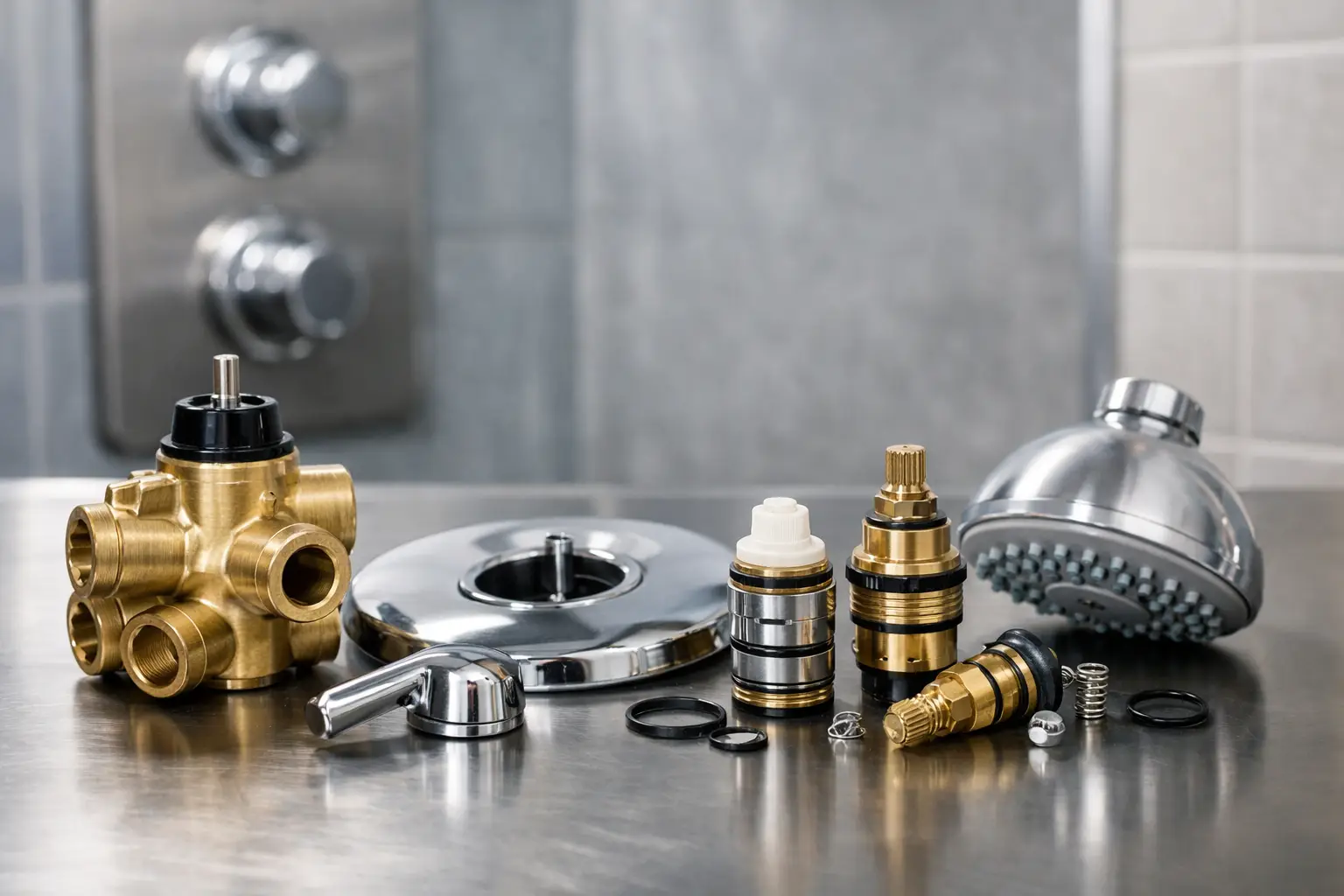
The most frequently replaced components include cartridges and control spindles, which regulate flow and temperature; thermostatic elements that respond to changes in supply-water temperature; pressure-balancing spools or pistons; integral stop assemblies; check valves; seats, springs, and seals; and trim components such as handles, escutcheons, sleeves, and limit stops.
Check valves deserve particular attention in systems with recirculation, tempering equipment, or cross-connection concerns. A failed check can allow unwanted crossover between hot and cold supplies, producing temperature instability that looks like a cartridge problem. Replacing the visible control component without testing the checks may leave the original complaint unresolved.
Likewise, a temperature-limit stop is not decorative hardware. It is a safety setting. When trim or a cartridge is replaced, verify that the limit stop is installed and adjusted for the facility’s approved maximum discharge temperature. That adjustment should reflect the project specification and the intended use of the shower, not a generic field setting.
Cartridge Failure Is Not Always the Root Cause
Mineral scale, solder debris, deteriorated supply piping, and inconsistent incoming pressure can damage valve internals. In older buildings, a replacement cartridge may restore control temporarily but reveal a broader maintenance issue. If several valves on the same branch show the same symptoms, inspect the hot-water system, mixing equipment, balancing, and water quality before treating each fixture as an isolated repair.
This distinction matters on occupied facilities. Repeated shutdowns and return trips cost more than the correct initial diagnosis, especially in healthcare, education, military, and institutional environments where shower availability can affect daily operations.
Match the Part to the Existing Approved Assembly
Commercial shower valves are often specified as complete assemblies. The valve body, trim, stops, check valves, and shower outlet configuration may have been selected to meet accessibility, anti-scald, vandal-resistance, infection-control, or agency requirements. Substituting an available component without verifying the assembly can affect warranty coverage, code compliance, or owner approval.
For a project replacement, review the original submittal, plumbing schedule, fixture specification, and approved manufacturer data where available. For a maintenance repair, compare the existing installation against current manufacturer service literature. This is particularly necessary where manufacturers have revised cartridges, changed trim mounting patterns, or discontinued legacy series.
A replacement can be acceptable without being an exact cosmetic match, but that decision should be made deliberately. In a public-facing restroom or an occupied modular unit, a mismatched trim plate may leave unfinished wall surfaces exposed. In a secure facility, an alternate handle may not meet the required vandal-resistant configuration. In an accessible shower, a replacement control must preserve required operability and reach characteristics.
What to Send With a Parts Request
When a shower valve is down, incomplete information is one of the main causes of sourcing delays. A concise request with usable details lets a plumbing supply partner move directly into identification and availability review.
Include the manufacturer and model number if known, photos of the complete valve and removed component, valve-body markings, quantity required, and the job location or facility type. Note whether the valve serves a standard shower, tub/shower, gang shower, accessible shower, or tempered-water system. Also identify whether the request is for an immediate repair, planned maintenance stock, or a project submittal.
For regulated work, provide the relevant specification section, approved manufacturer list, and any agency documentation requirements. Government and Milcon procurement may require more than a compatible part number. Buyers may need product data, country-of-origin information, compliance documentation, or evidence that the requested item matches the approved assembly. Clarifying these needs before material is ordered prevents a field-ready part from becoming an approval hold.
Plan for Lead Time, Not Just Unit Cost
Low-cost replacements can create expensive failures when they do not arrive on time, cannot be documented, or require a second mobilization. Commercial buyers should evaluate the total repair impact: facility downtime, labor access, wall restoration, inspection timing, and the risk of leaving a shower out of service.
For recurring facility maintenance, identify high-failure components and maintain a controlled stock of the exact cartridges, seals, checks, and trim repair items used across the site. This approach is especially effective for campuses, barracks, multifamily portfolios, correctional facilities, and modular production lines with repeated fixture packages. Standardizing valve series where possible also reduces the number of service parts that must be stocked.
For one-time repairs, availability may determine whether an exact replacement or a valve-body conversion is the better choice. If the original valve is obsolete and the repair kit is unavailable, replacing the complete valve assembly may be more practical than chasing individual legacy components. That choice depends on wall access, finish conditions, occupancy, and the cost of opening the installation. There is no universal answer, but the decision should be made with the full scope in view.
Verify Performance Before Closing the Wall
After installation, operate the valve through its full range. Confirm shutoff, temperature control, pressure balance or thermostatic response, diverter function where applicable, and the absence of leakage at the stem, trim, and accessible connections. Flush debris as required by the manufacturer before final cartridge installation, particularly after piping work.
Set and verify the maximum outlet temperature according to the facility standard and applicable code. Record the work performed, replacement part number, and any temperature adjustment for maintenance records. On larger projects, retain supporting product information with closeout documentation so the next service event does not start from zero.
The right replacement part is the one that fits the installed valve, satisfies the project requirements, and gets the fixture back in service without creating another problem. When identification is uncertain or documentation is part of the purchase, send the field details early. Clarke Plumbing Specialties can help turn a vague valve repair request into a material decision that keeps labor, inspections, and occupancy on schedule.