

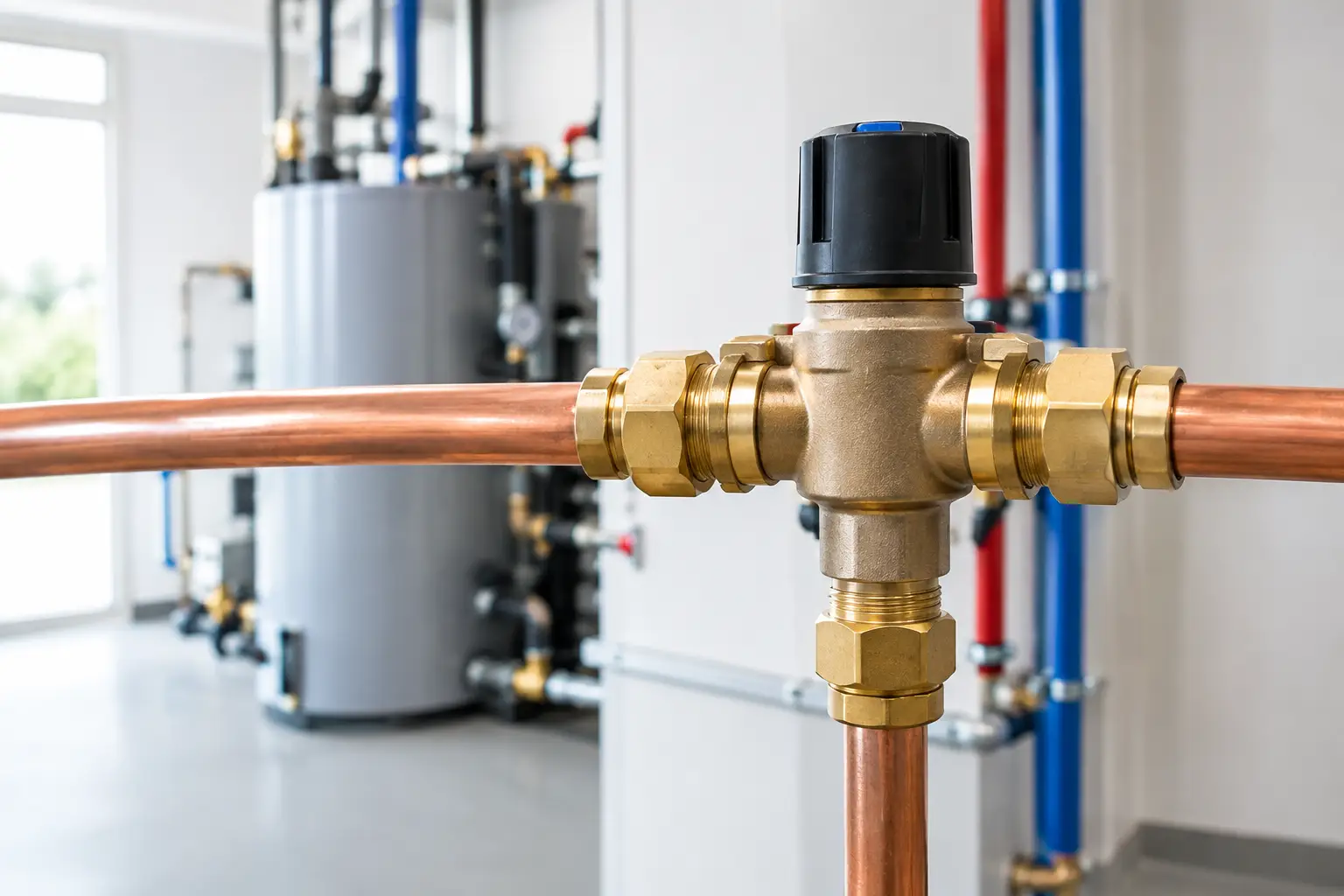
A water heater can be set for storage, recovery, and sanitation needs, but the fixture outlet often needs a lower, controlled delivery temperature. That gap is where mixing valves become a critical part of the commercial plumbing package. Selecting the wrong valve can create temperature complaints, failed inspections, insufficient flow during peak demand, or an expensive correction after walls are closed and systems are commissioned.
For contractors, facilities teams, and procurement staff, the valve is not a generic accessory. Its location, control method, capacity, connection size, certification, and service requirements must match the system it serves. A good selection starts with the actual application, not simply the pipe size.
What Mixing Valves Do in a Commercial System
A mixing valve blends hot and cold water to produce water at a controlled outlet temperature. In commercial domestic hot-water systems, that function protects end users from excessive temperature while allowing the hot-water source to operate at a temperature appropriate for the building’s operating plan.
The distinction matters. A central valve serving a domestic hot-water distribution system has a different job than a point-of-use valve under a lavatory. Likewise, a valve used at a shower or bathing fixture may need to respond to pressure changes as well as temperature changes. Treating all of these applications as interchangeable leads to specification errors.
The valve’s performance also depends on the system around it. Supply temperature, cold-water pressure, recirculation design, fixture demand, pipe heat loss, and the distance between the valve and fixture can all affect delivered water temperature. A correctly sized valve cannot compensate for every design or installation problem upstream and downstream.
Common Types of Mixing Valves
Commercial projects generally use thermostatic, pressure-balancing, or combination control devices. Each handles a different risk profile.
Thermostatic mixing valves
A thermostatic mixing valve senses outlet-water temperature and adjusts the hot and cold proportions to maintain a selected setpoint. These valves are commonly used for master mixing applications, recirculating domestic hot-water systems, and point-of-use temperature control where stable outlet temperature is the main objective.
Capacity is the key selection factor for a central thermostatic valve. Review the manufacturer’s flow charts at the expected inlet temperatures and the desired mixed-water temperature. A valve rated for a large maximum flow may not provide the required performance at the project’s actual temperature differential or at low-flow conditions. Confirm the minimum flow as well, particularly for low-demand facilities or systems with electronically controlled fixtures.
Pressure-balancing valves
Pressure-balancing devices react to changes in hot or cold inlet pressure. Their primary purpose is limiting sudden temperature shifts at a fixture when another demand changes the system pressure, such as a toilet flush or a nearby fixture opening.
They are frequently associated with showers and other bathing applications. A pressure-balancing device is not necessarily a substitute for a master thermostatic mixing valve. It addresses a different condition: pressure fluctuation at the fixture rather than central temperature control for the full domestic-water system.
Thermostatic and pressure-balancing combination valves
Some shower and bathing applications require both temperature control and pressure response. Combination valves can provide an added layer of protection where a fixture serves users who may be particularly vulnerable to hot-water exposure or where the plumbing design calls for tighter control at the point of use.
The applicable plumbing code, fixture type, owner requirements, and authority having jurisdiction should drive the final choice. For institutional, healthcare, education, hospitality, and accessible bathing projects, do not assume a typical commercial fixture valve satisfies the full requirement. Review the specification section and required listing or certification before release.
How to Size Mixing Valves Correctly
Sizing begins with the demand the valve must support, not the nominal connection size. A 1-inch valve may be appropriate for one application and undersized for another with the same piping size. The relevant question is whether it can deliver the required mixed-water flow at the available hot and cold inlet conditions.
Start with the fixture load and the anticipated simultaneous demand. A dormitory gang shower, school locker room, correctional facility, commercial kitchen, and office restroom all produce very different usage patterns. For a master mixing valve, include downstream recirculation requirements where applicable. A valve that appears adequate based on fixture demand alone can become unstable if recirculation flow was omitted from the calculation.
Next, identify the hot-water source temperature, cold-water inlet temperature, and required outlet setpoint. Seasonal cold-water changes can materially affect capacity in many parts of the United States. Use the manufacturer’s sizing data for the specific valve, rather than a broad rule of thumb.
Finally, check pressure loss at design flow. Excessive pressure drop can reduce fixture performance, especially in systems already operating close to minimum pressure requirements. Consider strainers, check valves, isolation valves, balancing components, and other accessories as part of the full assembly, not as separate afterthoughts.
Location and Installation Affect Performance
A master valve should be accessible for commissioning and service. Installing it above a hard ceiling without practical access may save a few minutes during rough-in and create years of maintenance difficulty. Facilities teams need room to verify temperatures, clean strainers, replace internal components, and isolate the valve without shutting down more of the building than necessary.
Follow the manufacturer’s piping orientation and installation requirements. Many assemblies require checks on hot and cold inlets to prevent crossflow. Strainers protect internal elements from solder debris, scale, and construction sediment. Isolation valves allow maintenance without draining an entire system. These are basic details, but they are often where field performance is won or lost.
Thermal disinfection procedures deserve early coordination as well. If the system is periodically operated at elevated temperatures, confirm how the valve, downstream components, and operating procedures are intended to handle that condition. The design team, owner, and manufacturer should be aligned before installation, not after a facility manager is handed an operating manual.
Documentation Matters on Regulated Projects
For public-sector and military construction work, a valve must do more than fit the piping layout. Submittals may need to establish manufacturer, model, materials, capacity, certifications, temperature range, connection details, and compliance with the project specification. A substitution without equivalent documentation can delay approval even when the product is physically available.
Procurement teams should compare the submitted model against the schedule line by line. Confirm whether the specification calls for a master mixing valve, a point-of-use device, a shower valve, or a complete station with integral components. Also verify body material, connection type, maximum working pressure, repair kit availability, and required accessories.
For projects with long lead times or approved-manufacturer restrictions, identify the valve package early. This is especially important when the project requires matching assemblies across multiple buildings or modular units. Clarke Plumbing Specialties helps buyers coordinate product information and sourcing details so a missing approval item does not become a field delay.
Serviceability Should Be Part of the Purchase Decision
Mixing valves are service components. Scale, debris, changing water conditions, and normal wear can affect calibration and response over time. Selecting a valve with available repair parts and a clear maintenance path is often a better long-term decision than buying solely on initial unit cost.
Ask practical questions before purchase: Can the thermostatic element be replaced? Are strainers accessible? Is there a field test procedure? Can the valve be recalibrated after installation? Are replacement parts available through normal commercial supply channels? For a facility with many identical units, standardizing on a serviceable valve can reduce inventory and maintenance training burdens.
Specify for the Actual System
The right mixing valve is the one that supports the project’s design temperature, demand profile, fixture application, code requirements, and maintenance plan. There is no single best valve for every building. A central domestic hot-water system, a gang shower room, and an individual public lavatory each demand a different approach.
Before placing the order, match the valve to the approved submittal, confirm capacity at real operating conditions, and include the accessories needed for a serviceable installation. That preparation keeps temperature-control components from becoming the small missing detail that holds up a startup, inspection, or turnover.




Leave A Comment