A plumbing assembly that arrives labeled, pressure-tested, documented, and ready for installation changes more than the pace of rough-in. It changes how a contractor plans labor, how a modular plant protects its production schedule, and how a procurement team manages risk. Prefabricated plumbing manufacturing trends are moving the work upstream, where repeatability, material control, and approved specifications can be managed before crews reach the field.
For commercial contractors, modular manufacturers, and government-project buyers, the opportunity is real but not automatic. Prefabrication only produces the intended gains when design information is stable, materials are available, and the assembly matches the field installation plan. A well-built rack is not useful if a valve, fitting, support component, or required submittal is missing when production starts.
Prefabricated Plumbing Manufacturing Trends Driving Change
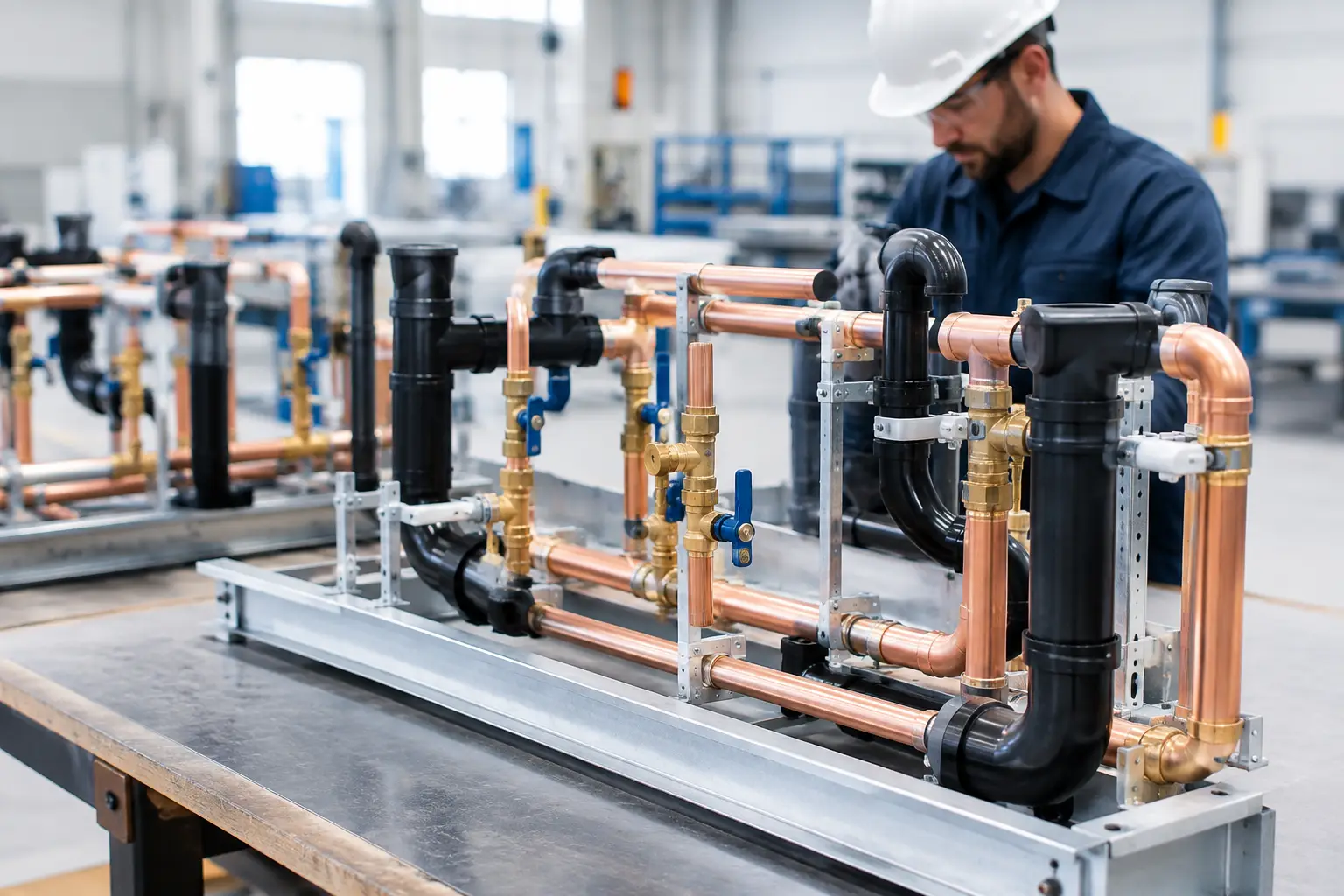
The strongest trend is a shift from loose-material purchasing to assembly-based material planning. Instead of ordering pipe, fittings, valves, carriers, drains, and supports as separate field-issued items, manufacturers and contractors are defining repeatable assemblies with controlled bills of material. Bathroom pods, corridor racks, riser modules, utility skids, and mechanical-room assemblies are common examples.
This approach is especially effective where layouts repeat. Hotels, multifamily buildings, healthcare projects, student housing, correctional facilities, and modular construction programs can benefit from a production process that treats plumbing assemblies as a manufactured component rather than a series of separate field tasks.
The goal is not simply to move labor offsite. It is to put the right work in the right environment. A controlled shop or assembly line can reduce weather interruptions, improve access to materials, and create a consistent process for measuring, cutting, joining, labeling, and inspecting components. Field crews can then focus on setting modules, making final connections, and resolving site-specific conditions.
Repeatability Is More Valuable Than One-Off Speed
Prefabrication is frequently discussed as a labor-saving measure, but repeatability is the more durable advantage. A single custom assembly may still save field hours, yet it can require extensive engineering coordination and setup. The economics improve substantially when a team can build the same assembly dozens or hundreds of times.
That does not mean every project should force standardization. Hospitals, laboratories, renovations, and highly customized institutional facilities often have unique routing, clearance, and equipment requirements. In those settings, the better approach may be partial prefabrication: standardized valve groups, wall carriers, equipment connection packages, or riser sections that reduce risk without pretending the entire building is repetitive.
Design for Manufacturing Starts Earlier
The most successful prefabrication programs involve plumbing contractors, manufacturers, engineers, and supply partners before materials are released. Model coordination alone is not enough. The team must decide how assemblies will be built, transported, stored, lifted, staged, and connected.
A model may show that a rack fits in a corridor, but the manufacturing plan must answer practical questions. Can it clear the loading route? Will temporary bracing be needed? Are the connection points accessible after the rack is set? Can the assembly be tested before shipment and retested after installation? Where will identification labels remain visible for inspection and maintenance?
Design for manufacturing also requires realistic tolerance planning. Buildings are not built to the same tolerances as a factory fixture. A prefabricated riser may be precise, while slab penetrations, structural steel, and wall framing vary in the field. Adjustable connections, flexible final tie-ins, and clearly identified datum points can keep small field variations from turning into major rework.
Digital Information Must Become Shop-Usable Information
Building information modeling is helping teams coordinate plumbing assemblies earlier, but a coordinated model is only the start. Manufacturing needs usable cut lists, spool drawings, material takeoffs, revision control, and identification standards. The information has to travel from design to purchasing, from purchasing to the shop floor, and from the shop floor to the field without losing its connection to the approved design.
The growing expectation is traceability. Contractors and owners want to know which materials were installed, where they were installed, and whether they match the approved submittal. This matters on every commercial project, but it carries additional weight in public-sector and military construction work where approvals, manufacturer data, domestic-content requirements, and closeout records can be as consequential as the physical installation.
A practical program assigns a unique identifier to each assembly and keeps that identifier consistent across the bill of material, shop drawing, label, shipping record, inspection record, and field installation plan. It is not glamorous work, but it prevents confusion when revisions, substitutions, and phased deliveries enter the picture.
Quality Control Is Moving Upstream
Offsite fabrication gives teams more opportunities to inspect work before it is concealed. Assemblies can be dimensionally checked, pressure-tested where appropriate, photographed, and reviewed against approved drawings in a controlled setting. That reduces the chance of discovering an incorrect fitting orientation or omitted valve after walls are closed.
Still, factory quality control does not eliminate field accountability. Transportation can damage assemblies, site handling can shift supports, and final connections must be completed correctly. The best programs define inspection points at both stages: after fabrication, upon delivery, after setting, and after final tie-in. This creates a clear chain of responsibility instead of assuming that an offsite test resolves every later risk.
Material compatibility deserves the same discipline. A rack assembled with the correct pipe but an unapproved valve, incorrect trim, or noncompliant support system can create inspection problems and replacement work. Product data, approved substitutions, and installation requirements need to be managed at the assembly level, not recovered later through a field audit.
Supply Planning Has Become Part of the Manufacturing Plan
A fabrication schedule is only as dependable as its material flow. Many assemblies depend on commodity items with relatively predictable availability, along with specialty components that may have longer lead times or restricted approval status. Treating every item as a standard purchase can stop an entire line over one missing component.
Procurement teams are responding by separating long-lead and approval-sensitive items from standard replenishment materials. Water heaters, commercial fixtures, bottle-filling equipment, specialized drains, accessible shower systems, and certain valves may require earlier release decisions than copper tube and common fittings. The exact split depends on the project, manufacturer requirements, and current lead times, but the planning principle remains the same: identify schedule-critical components before fabrication dates are committed.
Kitting is becoming more common for the same reason. A kit groups the material required for a specific rack, pod, room, or production batch so the assembly team is not pulling parts from general inventory at the last minute. Effective kitting reduces search time and limits accidental cross-use between projects. It also makes shortages visible earlier, when there is still time to source alternatives or adjust the production sequence.
For recurring modular and OEM production, suppliers increasingly need to support scheduled releases, consistent part identification, and documentation that follows the product into the finished assembly. The supplier relationship becomes less transactional and more operational. The question is no longer only, “Can you quote these materials?” It is, “Can you keep this line moving without compromising the approved specification?”
Labor Strategy Is More Than Headcount
Skilled plumbing labor remains a central reason organizations pursue prefabrication. Shop work can often be organized into repeatable tasks, supported by fixtures and work instructions, and performed with less time spent moving material around a jobsite. This can improve productivity and make it easier to train workers on a defined process.
However, prefabrication does not remove the need for experienced field labor. It changes the work mix. Teams still need foremen and installers who can coordinate setting, validate dimensions, make final connections, manage testing, and solve conditions that did not appear in the model. A weak handoff between shop and field can erase savings quickly.
The practical answer is to involve field leadership in assembly design and mockups. When the people who will set and connect the assemblies can identify access problems before full production begins, the program is far more likely to hold its schedule.
What Buyers Should Require Before Releasing Materials
The decision to prefabricate should be supported by more than a promise of faster installation. Buyers should confirm that the assembly scope is defined, the approved bill of material is complete, and the delivery sequence matches the installation sequence. They should also verify who owns revision control, testing records, packaging requirements, and field damage claims.
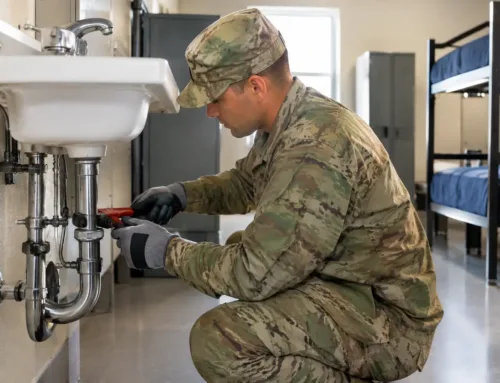
For regulated work, documentation should be planned at release rather than gathered near closeout. Product data, certifications, compliance requirements, approved submittals, and substitution records need to be connected to the materials that actually ship. This is particularly relevant for Milcon and government work, where a correct product without the required documentation can still create a procurement or acceptance issue.
The next step is straightforward: identify one repeatable plumbing scope, build a complete material and documentation plan around it, and test the process before expanding it across the project. Prefabrication performs best when production discipline and supply discipline are built into the same plan.