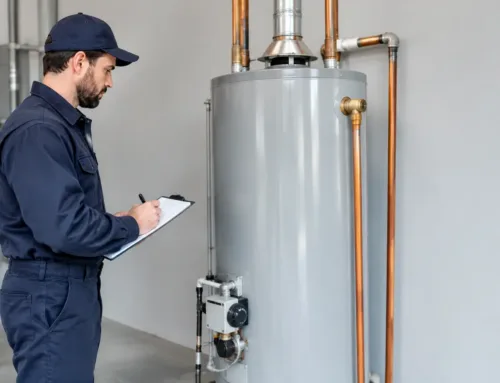
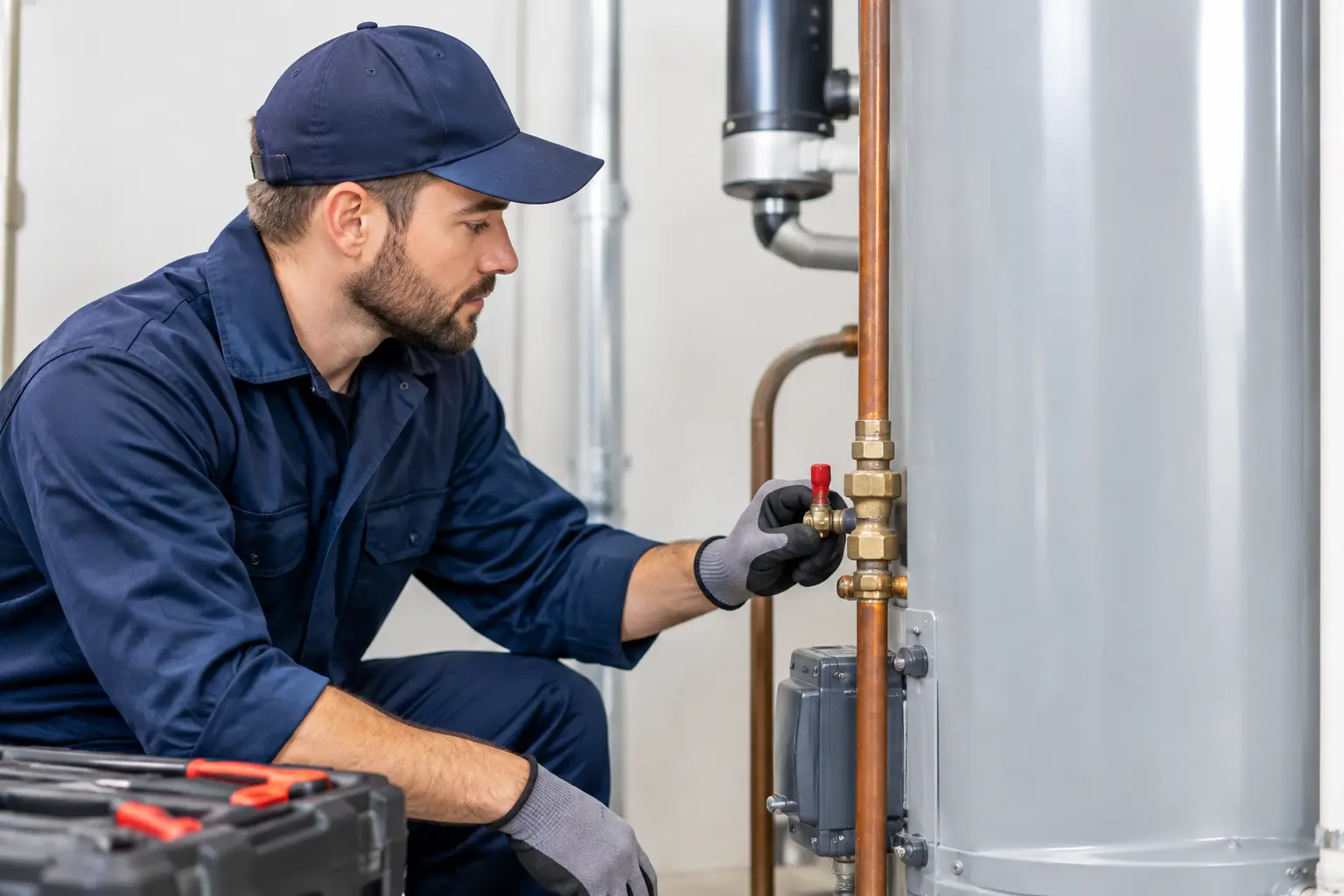
A commercial water heater can meet the specified recovery rate on startup and still become a maintenance problem well before turnover. In hard-water areas, the path is familiar: declining efficiency, longer recovery, nuisance high-limit trips, reduced fixture temperatures, and eventually a tank or heat-exchange failure. To prevent water heater scale, the project team has to address water chemistry, equipment selection, installation details, and service access before the equipment is put under daily load.
For contractors, facility teams, and procurement personnel, this is not simply a maintenance issue. Scale affects energy use, warranty exposure, replacement schedules, inspection outcomes, and the availability of domestic hot water for occupants. On hospitals, schools, multifamily properties, barracks, and modular production lines, an avoidable heater outage can become a schedule and operations problem quickly.
Why Commercial Water Heaters Scale Up
Most water heater scale is mineral deposit, primarily calcium carbonate, left behind when hard water is heated. As water temperature rises, dissolved minerals are more likely to precipitate and attach to heating elements, tank surfaces, flues, and heat-exchanger passages. The hotter the operating temperature and the harder the incoming water, the faster the deposit can develop.
This is especially relevant to instantaneous electric water heaters. Their compact heat-transfer surfaces and high-watt-density elements can accumulate deposits quickly when the application has hard water, elevated setpoints, or frequent use. Storage-type heaters have more internal volume, but they are not immune. Sediment settles in tank bottoms, insulates heat-transfer surfaces, and can contribute to noise, inefficient firing or heating, and early component wear.
Water hardness is not the only variable. Chlorides, pH, total dissolved solids, flow rate, incoming water temperature, recirculation design, and periods of low use all affect equipment performance. A facility with moderate hardness may still have recurring scale issues if hot-water temperatures are unnecessarily high or if the heater is repeatedly cycled under a poorly matched load profile.
Start With a Water Analysis, Not a Product Assumption
A water analysis should be part of the design and procurement record whenever a commercial water heater will serve a long-term, high-demand application. At minimum, review hardness, pH, chlorides, total dissolved solids, alkalinity, iron, manganese, and silica where applicable. Municipal water reports are useful starting points, but they may not reflect conditions at the building connection or seasonal variation.
The equipment manufacturer’s published water-quality limits govern. These limits vary by product and may set requirements for hardness, pH range, chloride concentration, filtration, or water treatment. Do not assume a generic softener or filter will satisfy a particular warranty condition. A treatment package that is appropriate for a storage heater may not be sufficient for a high-performance, tankless, or instantaneous electric unit.
For government and Milcon work, carry this information through the submittal process. Identify the heater, treatment equipment, isolation valves, flush connections, and any manufacturer-required accessories in a coordinated package. Leaving water treatment as a field decision can create a gap between the approved heater and the conditions needed to operate it as specified.
Specify the Right Equipment for the Actual Duty
Water heater selection should account for water quality as well as peak demand. A unit that is sized only around gallons per hour or kilowatts may be technically adequate on paper but difficult to maintain in the field.
For electric equipment, evaluate element construction and watt density. Lower-watt-density elements distribute heat over a larger surface area and can be more tolerant in hard-water service than compact, high-watt-density designs. That does not eliminate scale, but it can slow accumulation and reduce the chance of localized overheating.
Storage heaters need adequate access for inspection, drainage, and anode-rod service where applicable. Specify drain-valve arrangements that support meaningful flushing, not just a small valve placed where a hose cannot be connected. On larger systems, consider how the maintenance team will isolate one heater while keeping domestic hot water available to the building.
Temperature is another trade-off. Higher storage temperatures can support capacity and certain hygiene strategies, but they also accelerate mineral precipitation. Where code and the application allow, use a storage temperature and mixing-valve strategy that meets the delivery-temperature requirement without holding the entire system hotter than necessary. The correct answer depends on the building type, infection-control policy, recirculation design, and governing code.
Use Water Treatment That Matches the Problem
Water softening is often the most direct approach for high-hardness water. Ion-exchange softeners reduce calcium and magnesium before the water reaches the heater, helping protect elements, tanks, valves, and downstream fixtures. They require salt, regeneration capacity, drainage, and regular attention. Procurement teams should verify operating requirements, bypass arrangements, and the owner’s willingness to maintain the system before treating a softener as the default solution.
In some applications, filtration is needed ahead of the heater to control sediment, rust, or particulate matter. Filtration does not soften water, so it should not be presented as a substitute for hardness treatment. Likewise, scale-control devices based on physical conditioning may have a role in certain systems, but their effectiveness depends on the water conditions, flow profile, and manufacturer guidance. They should be evaluated against documented performance requirements rather than selected as a universal fix.
For facilities with complicated water chemistry, consult the heater manufacturer and a qualified water-treatment provider before installation. This is particularly important where chloride levels, aggressive water, or industrial process conditions could create corrosion concerns in addition to scale. One treatment method can solve a hardness issue while introducing operational considerations elsewhere in the system.
Design the Installation for Maintenance
The fastest way to turn routine scale control into a capital repair is to install a heater without service isolation, drain access, or room to remove components. Every commercial installation should make flushing and inspection practical within the facility’s operating constraints.
A maintainable arrangement typically includes isolation valves on the cold-water inlet and hot-water outlet, accessible unions or service connections where appropriate, a properly located drain, and manufacturer-recommended flush ports. Instantaneous and tankless units should have dedicated isolation and purge-valve assemblies where specified. These components add cost at installation, but they reduce labor time each time the unit requires descaling or diagnostic work.
Recirculation systems deserve additional attention. Verify pump sizing, balancing, return-water temperatures, and check-valve orientation. Poorly balanced recirculation can force portions of the system to run hotter than intended, increase runtime, and compound scale formation. Insulate distribution piping and control the recirculation system so the heater is not carrying unnecessary load around the clock.
Do not overlook installation cleanliness. Construction debris, solder residue, pipe scale, and loose particulates can enter new equipment during startup. Flush the domestic water piping, clean strainers, and follow the manufacturer’s startup procedure before placing heaters into full service. A clean commissioning record gives the owner a better baseline for future maintenance decisions.
Build a Service Interval Around Real Conditions
There is no single annual interval that fits every commercial water heater. A low-use building with soft municipal water may need only periodic inspection, while a hard-water facility with high recovery demand may require flushing or descaling several times a year. The interval should be based on water analysis, runtime, heater type, operating temperature, and findings from the first service cycles.
A practical service program includes four distinct actions:
- Inspect elements, controls, drains, relief-valve discharge arrangements, and accessible connections for signs of mineral buildup or leakage.
- Flush storage tanks to remove sediment before it becomes densely packed at the tank bottom.
- Descale instantaneous heaters and heat-exchange surfaces using the manufacturer-approved procedure and cleaning solution.
- Record inlet conditions, temperature settings, service findings, parts replaced, and the next recommended service date.
Documenting the work matters. A service log helps facilities identify whether scale is increasing, whether a treatment system is underperforming, and whether a heater is being operated outside its intended conditions. It also supports warranty conversations and provides useful records for public-sector facilities with formal maintenance requirements.
Watch the Early Warning Signs
Scale rarely arrives without warning. Longer heat-up times, unstable outlet temperatures, reduced flow through a water-heating appliance, unusual popping or rumbling from a storage tank, and repeated high-limit events all warrant investigation. A sudden increase in energy use can also point to insulated heat-transfer surfaces.
Do not respond by simply raising the setpoint or replacing a tripped component. That may restore service temporarily while making the underlying condition worse. Confirm incoming water quality, inspect the affected equipment, review the service history, and determine whether treatment, operation, or equipment selection needs to change.
Prevent Water Heater Scale Before Turnover
The most effective time to prevent water heater scale is during submittal review, before piping is closed up and before the facility inherits the equipment. Confirm the manufacturer’s water-quality requirements, include the required treatment and service valves, and make maintenance access part of the installation standard rather than an afterthought.
For schedule-sensitive commercial work, that level of coordination protects more than the water heater. It protects labor productivity, occupant service, closeout documentation, and the owner’s confidence that the specified system can be maintained. When the next job calls for a heater, valves, treatment components, or supporting material that must match the approved package, Clarke Plumbing Specialties can help keep the procurement side moving while the field team keeps the system serviceable.