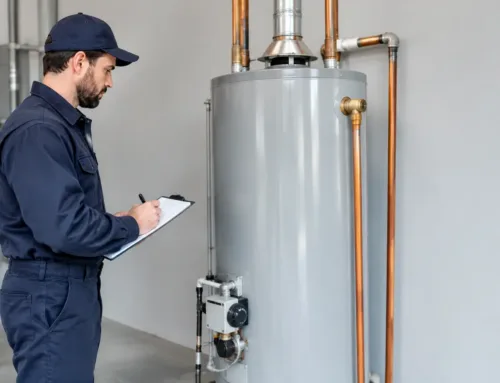
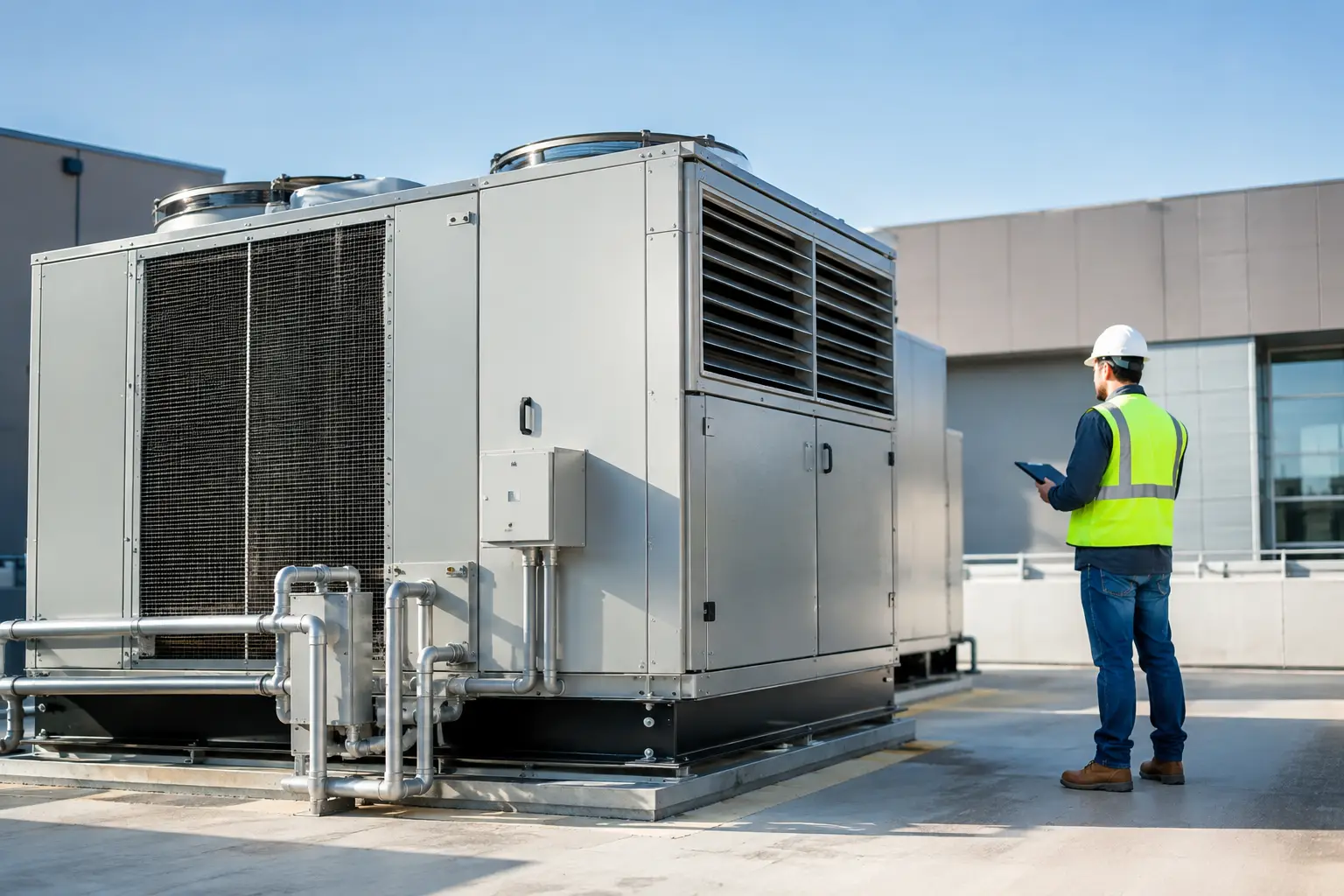
A heater can meet the required recovery rate and still fail the job if its emissions rating, venting arrangement, or documentation does not match the bid package. That is why evaluating ultra low NOx heater brands requires more than comparing a nameplate capacity or a quoted price. For commercial contractors, facilities teams, and public-project buyers, the approved model must satisfy the local air district, the mechanical design, the installation conditions, and the procurement schedule.
The right manufacturer often depends on the application. A high-demand locker room, a school renovation, a modular housing line, and a military facility can each call for a different water-heating approach. Brand selection should start with the specified equipment type and compliance requirement, then move into lead time, accessories, approval status, and documentation.
What Ultra Low NOx Means on a Commercial Job
Nitrogen oxides, commonly identified as NOx, are combustion byproducts created by gas-fired equipment. Air-quality rules in some jurisdictions limit the amount of NOx a water heater can produce. California markets are the most familiar example, but local rules, owner standards, and project specifications can create similar requirements elsewhere.
“Ultra low NOx” is not a universal performance label with one identical threshold for every product. The allowable emissions level may depend on the governing air-quality rule, equipment category, fuel input, and installation location. A product described as low NOx is not automatically acceptable where the specification calls for ultra low NOx. Likewise, an ultra low NOx model suitable for one jurisdiction may require a different certification or product configuration in another.
For procurement purposes, the useful question is not simply, “Does this brand make ultra low NOx heaters?” It is, “Does this exact model, at this input and capacity, meet the requirement written into this project?” That distinction prevents expensive substitutions and failed inspections.
Commercial Ultra Low NOx Heater Brands to Evaluate
Several established manufacturers offer gas-fired water-heating equipment with ultra low NOx options. Product availability and emissions ratings vary by series, capacity, input range, and regional designation, so the published specification sheet for the proposed unit should always control.
A. O. Smith
A. O. Smith is commonly specified across commercial and institutional water-heating work. Its commercial lineup includes storage water heaters and higher-input equipment used in applications with steady or high domestic hot-water demand. Depending on the series, ultra low NOx options may be available for projects requiring stricter emissions performance.
For a replacement project, confirm more than tank size and BTU input. Check the physical footprint, water and gas connections, vent category, electrical requirements, service clearance, seismic needs, and whether the replacement must connect to an existing building-management or recirculation system. A direct capacity match is not always an installation match.
Bradford White
Bradford White is a frequent choice for commercial water-heating replacements and new construction, particularly where a contractor needs familiar serviceability and a broad range of tank-style equipment. Its commercial offerings can be a practical fit for schools, multifamily properties, light commercial facilities, and other applications that favor storage-based recovery.
When reviewing an ultra low NOx Bradford White option, verify the required model suffixes and regional approvals. The distinction between standard, low NOx, and ultra low NOx versions matters. Do not assume the local distributor stock model is interchangeable with the model listed in the submittal package.
Rheem
Rheem offers commercial water-heating products used in a range of facilities applications, including tank-type and high-efficiency configurations. For contractors working on replacement work, Rheem can be worth evaluating when existing piping, mechanical-room access, and service familiarity make a conventional commercial water heater the preferred route.
The trade-off is that emissions compliance, efficiency, venting, and recovery performance must be evaluated together. A higher-efficiency unit may reduce fuel consumption but introduce condensing venting requirements, condensate drainage, neutralization, or controls considerations that a standard atmospheric replacement did not have.
Lochinvar
Lochinvar is well known in larger commercial domestic hot-water and hydronic applications, including high-efficiency water heaters, boilers, and engineered systems. It is often considered when a project needs higher input, tight mechanical-room planning, sophisticated controls, or multiple units staged for redundancy.
For ultra low NOx applications, Lochinvar equipment should be reviewed at the model level with attention to the project’s venting design and sequence of operation. A condensing system can deliver strong efficiency and flexible vent routing, but it also requires proper combustion-air planning, condensate management, and commissioning. These requirements should be identified before materials arrive, not after the unit is set in place.
PVI and Other Engineered Commercial Options
PVI and similar engineered commercial water-heating manufacturers may be appropriate where the project calls for large-volume domestic hot water, high recovery, packaged systems, or facility-specific engineering. Hospitals, central plants, campuses, correctional facilities, and large institutional buildings may need more than a standard commercial tank heater.
These systems can offer application-specific performance, but they generally require earlier coordination. Freight, rigging, floor loading, piping headers, controls, factory options, and start-up requirements can all affect the project schedule. On government and Milcon work, the documentation path may be as significant as the equipment itself.
How to Compare Ultra Low NOx Heater Brands
The best comparison begins with the project documents. Review the equipment schedule, mechanical specifications, addenda, approved manufacturers list, and local code requirements before requesting a quote or proposing an alternate. If the named basis-of-design unit is unavailable, a substitution needs to be measured against every stated requirement, not just gallons and BTUs.
Capacity and recovery remain central. A storage heater may be appropriate where demand peaks are predictable and the facility has room for a tank. A high-input or condensing water heater may suit a smaller mechanical room or a facility with heavy, continuous demand. Tankless equipment can be effective in certain distributed or point-of-use applications, but it is not a universal replacement for a central storage system. Gas sizing, electrical service, water quality, maintenance access, and peak-flow assumptions all matter.
Venting is another common source of field conflict. Confirm whether the equipment is atmospheric, power vented, direct vented, or condensing. The approved vent material, maximum equivalent length, termination location, combustion-air method, and condensate requirements must align with the building conditions. A heater that is available quickly does not help if the required venting components are missing or the installation cannot meet manufacturer instructions.
Documentation deserves equal attention. Commercial buyers should request the current cut sheet, installation instructions, emissions certification information, efficiency data, warranty details, and required accessory information. Public-sector and government projects may also require manufacturer letters, domestic-preference documentation, product approvals, submittal formatting, or other project-specific records. The correct paperwork supports approvals before it becomes a field problem.
Avoiding the Most Common Procurement Mistakes
The first mistake is treating “ultra low NOx” as a generic product feature. It is a model-specific compliance issue. Verify the actual proposed part number and its stated emissions rating against the governing requirement.
The second is overlooking accessories and field-installed components. Vent kits, termination assemblies, neutralizers, seismic restraints, expansion tanks, mixing valves, control packages, and service valves may be necessary to complete the installation. A heater-only purchase order can leave the crew waiting on material that should have been identified during takeoff.
The third is waiting too long to address an alternate. If a specified model has an extended lead time, start the substitution review early. An acceptable alternate may need engineer review, owner approval, revised venting, or changes to the electrical and plumbing scope. Early coordination protects the schedule far better than an urgent request after rough-in is complete.
Build the Purchase Around the Job, Not Just the Heater
Commercial water-heating procurement works best when the equipment, compliance records, and installation materials are treated as one package. Clarke Plumbing Specialties helps project buyers work through brand options, supporting documentation, and the related materials that keep an approved heater from becoming an incomplete delivery.
Before releasing an order, confirm the exact model, fuel type, emissions requirement, capacity, input, venting method, electrical needs, included controls, accessory scope, freight conditions, and required documents. Those checks take less time than correcting a mismatch after delivery.
When an ultra low NOx requirement is written into the job, the winning brand is the one that fits the application, clears approval, and arrives with the details needed to put it into service.