

A copper tube callout that simply says “copper” leaves too much to chance on a commercial order. Copper tube grades affect wall thickness, allowable application, joining approach, pricing, inspection acceptance, and what documentation must accompany the material. For a contractor or procurement team, the right choice is the one that matches the engineered specification, local code, service conditions, and installation method without creating a material gap when crews are ready to work.
In commercial plumbing, the term “grade” is often used loosely. Most purchasing documents are actually referring to copper tube type, such as Type K, Type L, Type M, or DWV. The types have different wall thicknesses at a given nominal size. That distinction drives performance and cost, but it does not replace the project specification or the authority having jurisdiction.
Copper Tube Grades: Start With the Standard
For water distribution and many plumbing applications, ASTM B88 is the common standard referenced for seamless copper water tube. It covers Type K, L, M, and DWV copper tube in the dimensions used throughout plumbing work. A purchase order should not stop at the type designation. Confirm the required ASTM standard, nominal size, temper, length, end condition, manufacturer, and any project-specific domestic-content or approval requirement.
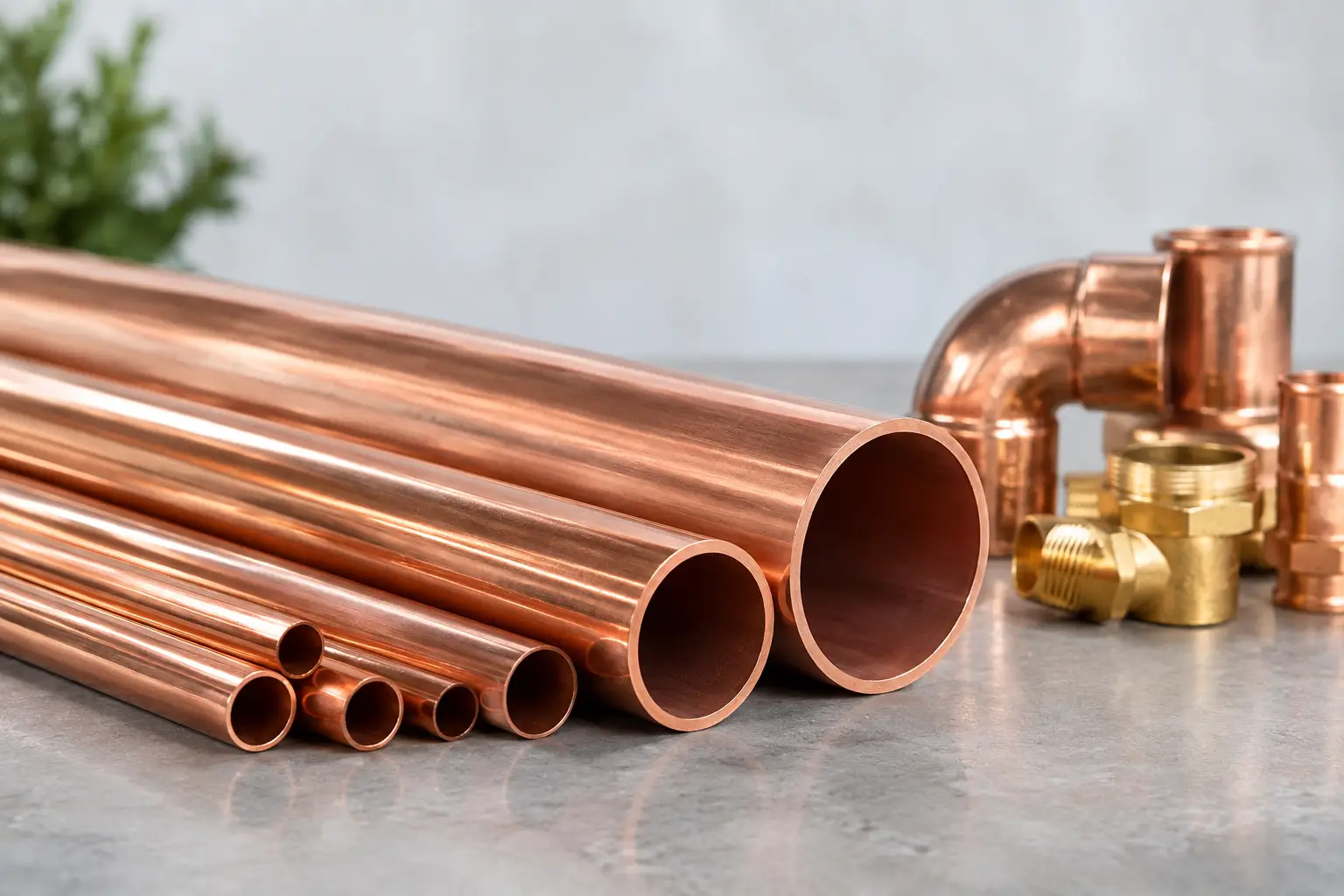
A key field detail is that copper tube is identified by nominal size, while its actual outside diameter aligns with standard plumbing tube dimensions. Type K, L, and M in the same nominal size share the same outside diameter. The wall thickness changes from type to type, so the inside diameter and weight per foot change as well. Fittings are selected by tube outside diameter, but pressure capability and material cost are affected by wall thickness.
When the drawings, specs, and submittal register do not agree, do not substitute based on appearance or common practice. Resolve the conflict before material is released. A less expensive wall thickness can become an expensive correction if it fails a project requirement, inspection, or owner standard.
Type K: The Heaviest Common Copper Tube
Type K has the thickest wall of the common plumbing tube types. It is regularly specified where added durability, higher pressure capability, or underground service conditions are part of the design. It is available in hard-drawn straight lengths and, in many sizes, annealed coils that can reduce joints on underground runs.
For buried water service, Type K is a frequent specification, particularly where the pipe will be exposed to backfill, movement, or difficult access after installation. That does not mean Type K is automatically required for every underground line. Soil conditions, local code, project details, and the engineer’s requirements still control. Sleeving, insulation, tracer provisions, cathodic concerns, and protection at penetrations may also be part of the installation package.
The trade-off is straightforward: Type K costs more and weighs more than Type L or Type M. Ordering it where Type L is specified can raise project cost without adding approved value. Ordering a lighter type where Type K is required can stop the work altogether.
Type L: The Commercial Workhorse
Type L is commonly used for interior water distribution in commercial, institutional, and multifamily construction. Its wall is thinner than Type K but thicker than Type M, giving it a practical balance of durability, pressure performance, and installed cost. It is widely available in hard straight lengths for above-ground work and in soft coils for applications that call for fewer connections.
On many commercial projects, Type L is the default assumption for domestic cold water, hot water, and recirculation piping. It should remain an assumption only until the project documents confirm it. Healthcare, education, hospitality, correctional, military, and public-sector facilities may include owner criteria that are more restrictive than the baseline plumbing code.
Type L also appears in specialized systems, but the tube designation alone is not enough to establish suitability. For medical gas, for example, the project may require specifically cleaned, capped, and labeled tube, along with controlled handling and brazing procedures. Supplying standard Type L from general plumbing stock when a medical-gas listing is required creates a documentation and compliance problem, even if the wall thickness is correct.
Type M: A Lighter Option With Limits
Type M has the thinnest wall among the common pressure-rated copper water tube types. It can be an economical selection for permitted above-ground water piping where allowed by code and specification. It is commonly associated with residential work, but some commercial designs allow it in limited applications.
Its lower material cost is the primary advantage. The limitation is that Type M is not a universal value-engineering substitute for Type L. Some jurisdictions restrict its use in commercial occupancies, and many engineers or facility owners specify Type L as a minimum for service life, abuse resistance, or standardization. Mechanical rooms, exposed piping, high-traffic maintenance areas, and institutional facilities deserve particular attention because impact exposure can matter as much as operating pressure.
If Type M is proposed as a substitution, review the engineer’s written acceptance, code compliance, pressure and temperature conditions, warranty implications, and the complete system requirement. A substitution should document what is changing, not simply state that the material is equivalent.
DWV Copper Tube Is Not Water Tube
DWV copper tube is intended for drain, waste, and vent systems. It has a different wall thickness and is not intended for pressurized water distribution. The designation is clear, but material mix-ups can happen when several copper types arrive at the same site or when field crews pull from partially labeled stock.
DWV tube is used with drainage-pattern fittings and joining methods designed for sanitary drainage work. Do not assume that a tube’s copper composition makes it interchangeable with Type K, L, or M. The system function, fitting pattern, pressure condition, and governing standard all matter.
For procurement, keep DWV line items separate from domestic-water tube and fittings on takeoffs, purchase orders, staging labels, and receiving checks. That small control helps prevent a crew from installing the wrong material in a concealed location where correction requires demolition.
Hard, Soft, and ACR Tube Need Separate Review
Tube temper can be as important as tube type. Hard-drawn copper is supplied in straight lengths and holds its shape well for exposed runs, rack installations, and mechanical-room work. Annealed soft copper is supplied in coils and bends more readily, which can reduce fittings on long service runs. The project must allow the selected temper, and installers must use bending and support practices appropriate to the tube.
ACR copper tube is another category that should not be grouped casually with plumbing tube. It is typically produced and packaged for air-conditioning and refrigeration service, often under a different standard and cleanliness requirement. Its sizing convention may be based on actual outside diameter rather than plumbing nominal size. Before ordering, verify the system application, standard, coil or straight-length requirement, cleaning condition, caps, and compatibility with the specified fittings.
Specify the Full Material Requirement
The most reliable copper tube order is built from the specification, not from a verbal shorthand. Along with the tube type, document the system service, nominal size range, ASTM standard, temper, length, required markings, and approved manufacturer. Include insulation requirements where applicable, since insulation thickness and vapor-barrier details can affect lead times and field sequencing.
For government and Milcon work, add the documentation requirements early. The job may require manufacturer data, certifications, domestic-preference information, approved submittals, or project-specific product identification before release. These are not administrative extras. Missing paperwork can hold material at receiving or delay installation even when the tube itself is on site.
Also coordinate the tube with the joining method. Soldered, brazed, press-connect, and mechanical connection systems have different preparation, clearance, training, and approved-component requirements. A pressure-rated tube does not make every joining method acceptable. Confirm that fittings, valves, fluxes, filler metals, press tools, and system approvals align with the contract documents.
A Better Purchasing Check Before Release
Before releasing a copper order, compare the takeoff against the approved drawings and verify whether each line is Type K, L, M, DWV, or a specialized tube product. Confirm straight lengths versus coils, then check fitting compatibility and any required accessories. Finally, separate items that need submittals, certifications, or special packaging from standard stock material.
That review takes less time than sorting out a wrong-wall-thickness delivery after crews have staged pipe, fittings, and labor. When a specification is incomplete or a required item is difficult to locate, Clarke Plumbing Specialties can help identify the complete material requirement and support the documentation path needed to keep the order moving.
The practical goal is not to buy the heaviest copper or the lowest-cost copper. It is to put the exact approved tube on the job when the installation sequence calls for it, with the records and matching components that let the work pass forward without delay.





Leave A Comment