

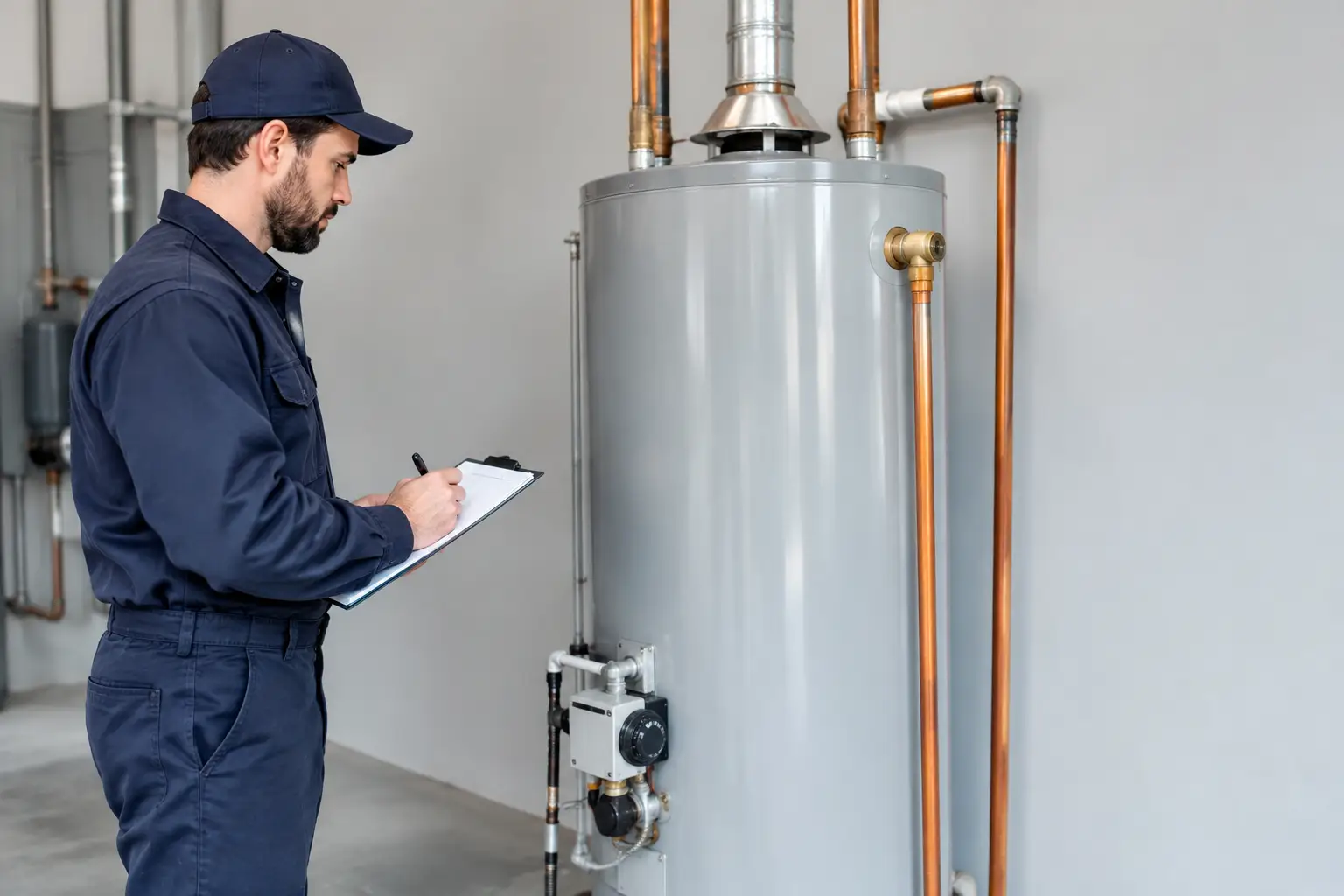
A commercial water heater rarely fails at a convenient time. It fails before a morning shift, during a tenant turnover, midway through a school renovation, or when a project is ready for inspection. Knowing when to replace commercial water heaters lets facilities teams and contractors control the purchase, specification, and installation instead of reacting to an outage.
The decision should not rest on age alone. A 12-year-old heater in a lightly used administrative building may still have serviceable life, while a six-year-old unit serving a commercial kitchen, locker room, multifamily property, or manufacturing process may be nearing failure. Usage profile, water quality, maintenance history, recovery demand, fuel source, code requirements, and the cost of an interruption all matter.
When to Replace Commercial Water Heaters: The Clear Signals
A tank leak is the most direct replacement signal. Once the tank itself is leaking from corrosion, replacement is generally the practical option. External piping, valves, temperature and pressure relief components, and circulator connections can often be repaired. A failed tank cannot.
Rust-colored water, visible corrosion around the tank base, recurring moisture, or sediment discharge can also point to internal deterioration. Do not assume every sign of rust means immediate tank failure. In some buildings, deteriorated piping is the source. But a technician should determine whether the heater is contributing to the problem before a small leak becomes a shutdown.
Capacity loss is another common trigger. If occupants report inconsistent hot water, recovery time has slowed, or equipment cannot maintain setpoint during peak demand, the existing unit may be undersized, scaled, poorly controlled, or simply worn out. Replacing it with the same capacity without reviewing actual demand can repeat the problem.
Repeated service calls deserve the same attention as a visible leak. A replaceable component – such as an element, thermostat, gas control, igniter, anode rod, relief valve, or mixing valve – does not automatically justify a new heater. However, the calculation changes when repairs are frequent, parts are obsolete, labor access is difficult, or the unit is creating operational risk. A repair that keeps a critical system running today may still be the wrong choice if it leaves the facility exposed next month.
Age Is a Planning Tool, Not a Failure Date
Conventional commercial storage water heaters often provide roughly 8 to 15 years of service, depending on installation conditions and maintenance. High-demand applications, hard water, poor venting, improper combustion settings, failed anode protection, or neglected flushing can shorten that range. Tankless and instantaneous electric water heaters have different service profiles, but heat exchangers, elements, controls, and flow requirements still need evaluation.
For procurement planning, start reviewing conventional tank equipment before it reaches the end of its expected service range. This gives the team time to confirm dimensions, input or kilowatt requirements, venting, electrical capacity, seismic restraints, clearances, connection locations, and code requirements. It also avoids the expensive pattern of selecting whatever unit is locally available after a failure.
Age becomes more urgent when the heater serves an essential function. Hospitals, barracks, correctional facilities, schools, food-service operations, manufacturing lines, and multifamily buildings can absorb neither long outages nor improvised substitutions. For these applications, planned replacement may cost less than emergency labor, temporary equipment, tenant complaints, lost production, and expedited freight.
Watch the operating conditions
A heater that operates continuously near its capacity deserves closer scrutiny than one with long recovery periods. Heavy draw cycles accelerate wear and expose sizing mistakes. Incoming water temperature also matters. A system designed around moderate ground-water temperatures may struggle during colder months, even if the equipment is mechanically sound.
Water chemistry is equally relevant. Hard water promotes scale buildup on heating surfaces, reducing efficiency and increasing recovery time. Corrosive water can shorten tank and component life. Where water conditions are known to be difficult, maintenance records and manufacturer guidance should shape both the replacement timing and the equipment selection.
Repair or Replace? Make the Operational Case
The right question is not simply, “Can this heater be repaired?” Most equipment can be repaired at some point. The better question is whether the repair restores dependable service at a reasonable cost and with acceptable risk.
A targeted repair may be appropriate when the tank is sound, the issue is isolated, replacement parts are readily available, and the unit still meets demand. This is common with controls, heating elements, pilot or ignition components, relief valves, and external accessories. A repair can also be the practical short-term choice when a replacement requires electrical upgrades, venting changes, structural work, or a lengthy shutdown window.
Replacement is usually the stronger decision when tank integrity is compromised, capacity no longer matches the load, repairs are becoming repetitive, efficiency has declined sharply, or the installed model is no longer supportable. Consider the total cost of ownership rather than the invoice for the next service call. Include labor disruption, lost hot-water availability, access requirements, rental equipment, compliance exposure, and the lead time for the correct replacement.
For government and institutional work, documentation adds another layer. Approved manufacturers, specification sections, submittals, Buy American or project-specific requirements, and inspection expectations can limit acceptable substitutions. An emergency purchase that does not align with the project requirements can create approval delays after the equipment is already on site.
Replace Like for Like Only After Reviewing the Load
Like-for-like replacement is efficient only when the original design still serves the building. Before ordering, verify the required storage volume, recovery rate, input capacity, voltage, phase, fuel type, first-hour demand, and temperature-delivery requirements. Review whether demand has changed because of an addition, fixture replacement, occupancy increase, production change, or revised domestic hot-water recirculation system.
The replacement also has to fit the physical installation. Measure door openings, equipment room access, floor space, service clearances, vent routes, condensate provisions where applicable, and connection elevations. A unit that meets the schedule but cannot be moved through the building does not solve the jobsite problem.
For electric commercial heaters, confirm available voltage, phase, amperage, breaker capacity, and disconnect requirements. For gas-fired equipment, verify fuel supply, vent category, combustion air, flue routing, and drainage requirements. If replacing older atmospheric equipment with a higher-efficiency option, installation conditions may change significantly. The efficiency gain may be worthwhile, but it should be evaluated before materials are released.
Do not overlook safety and code upgrades
Replacement work can expose deficiencies that were tolerated in an older installation. Confirm temperature and pressure relief valve discharge routing, expansion control, mixing valve requirements, seismic restraints, drain provisions, insulation, shutoff valves, and accessibility for service. Local code and the authority having jurisdiction determine final requirements, but catching these items during procurement prevents field delays.
This is particularly important on public-sector and Milcon projects, where a complete submittal package and compliant material trail are part of the deliverable. Equipment selection, accessories, and documentation should move together.
Build a Replacement Plan Before the Emergency
Facilities teams should keep a simple asset record for each commercial water heater: installation date, model and serial number, capacity, energy source, repair history, water conditions, peak-load concerns, and any known access constraints. That record turns replacement planning from a scramble into a scheduled capital or maintenance decision.
For contractors, the practical step is to identify long-lead equipment and critical accessories early. A heater may be available while the specified venting components, control package, mixing valve, expansion tank, or approved documentation are not. Ordering the complete scope together reduces partial deliveries and return visits.
Clarke Plumbing Specialties supports commercial buyers who need equipment, related materials, and project documentation aligned before the schedule becomes an emergency. The best time to begin that conversation is while the existing heater is still operating.
A planned replacement gives your team options: select the correct capacity, verify compliance, coordinate labor, and stage material around building operations. Waiting for the tank to fail leaves only one option – getting hot water back as fast as possible, often at the highest cost.



Leave A Comment