A material decision that looks minor on a takeoff can affect labor sequencing, inspection timing, and service calls for years. CPVC versus copper piping is not a universal price comparison. For commercial work, the right choice depends on the specified system, local code, water chemistry, operating temperature, occupancy, and the documentation required to get the material approved.
Copper remains a familiar, broadly accepted option for domestic water systems. CPVC can reduce material cost and speed installation where the system design, code, and application support it. The best procurement decision starts with the basis of design, then tests each material against the actual conditions of the job.
CPVC Versus Copper Piping: The Core Differences
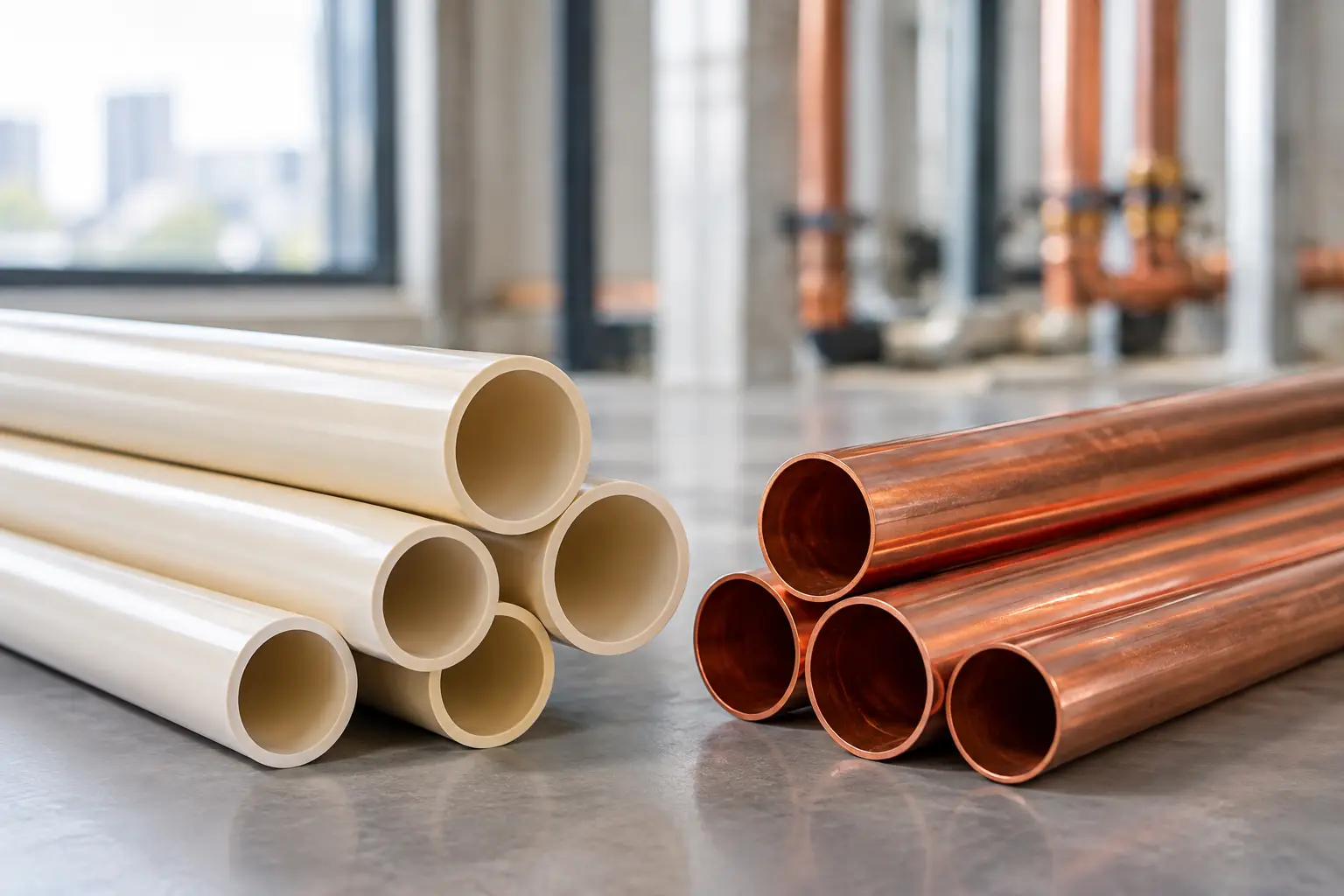
Copper is a metal tubing system joined by soldering, brazing, press fittings, or other approved mechanical connection methods. It is used across commercial domestic water applications and is available in multiple tube types and sizes. Its long service history makes it a common choice when owners, engineers, and authorities having jurisdiction expect a conventional metallic piping system.
CPVC is a chlorinated polyvinyl chloride piping material used for hot and cold potable water in listed applications. It is typically joined with a manufacturer-approved solvent cement system. Because it is lighter and does not require flame-based joining, CPVC can be efficient for repetitive installations, occupied-facility renovations, and modular manufacturing environments where labor flow matters.
Neither material should be selected by pipe price alone. A lower unit cost can disappear if the material requires additional supports, longer cure times, special protection, or a redesign of the specified system. Conversely, a familiar material can create unnecessary labor cost if the project has large quantities of repetitive branch piping and limited space for hot work.
Cost Means Material, Labor, and Project Risk
Copper generally carries a higher material cost and its market price can move significantly during a project. Fittings, valves, joining consumables, and the labor required for soldered or brazed connections also need to be included in the estimate. On a large domestic-water package, those variables can have a meaningful impact on the buyout.
CPVC is often less expensive per foot and its light weight reduces handling effort. Installers can cut and assemble it without torches, which may reduce labor on straightforward runs. That advantage is especially relevant when a contractor is working in finished spaces, near sensitive equipment, or under site rules that make hot-work permits and fire-watch procedures time-consuming.
However, CPVC installation is not simply faster by default. Solvent-cement joints need proper preparation, correct cement selection, and cure time based on pipe size, temperature, humidity, and system pressure. The crew must protect the piping from damage during storage and construction. If the schedule calls for an immediate pressure test, commissioning team coordination is necessary.
Copper can be more labor-intensive, but experienced crews know its installation requirements well. Press systems may also change the labor equation where the specified fitting system is available and accepted. For procurement teams, the useful comparison is installed cost at the required schedule, not a line-by-line pipe price.
Temperature, Pressure, and Water Conditions Drive Performance
Both materials must be matched to the designed operating conditions. Verify the manufacturer’s current pressure-temperature ratings for the exact pipe and fitting system, then compare them with the project’s domestic cold water, domestic hot water, recirculation, and disinfection requirements. Do not assume that a material suitable for a branch line is automatically suitable for every part of a mechanical room or distribution system.
CPVC is commonly selected for hot and cold potable water, but temperature changes affect its pressure capability. Support spacing, allowance for expansion and contraction, and routing around heat sources deserve attention. Long straight runs can require a planned expansion strategy rather than field adjustments after installation.
Copper performs well at elevated temperatures, but it is not immune to water-related failures. Aggressive water chemistry, excessive velocity, poor workmanship, debris, and electrical issues can contribute to corrosion or erosion. Facilities with a history of pinhole leaks or documented water-quality concerns should involve the engineer, owner, or water-treatment team before treating copper as the automatic replacement material.
Chemical compatibility is equally important for CPVC. Certain oils, sealants, lubricants, insulation adhesives, firestop materials, and cleaning products may be incompatible with CPVC. The compatible-material list should be reviewed before submittal, not after the piping has been installed. This is particularly important on institutional projects where multiple trades use products in the same ceiling space.
Code Acceptance and Documentation Cannot Be an Afterthought
Commercial specifications and local plumbing codes determine what can be installed. Copper and CPVC may both be permitted for domestic water piping, but acceptance can vary by jurisdiction, application, building type, and adopted code edition. A hospital addition, school renovation, federal facility, and modular housing line may each have different requirements.
Review the drawings and specifications for required pipe standards, tube type or CPVC schedule, potable-water listings, fitting requirements, insulation provisions, firestopping details, and disinfection procedures. If the project has a named basis of design, an alternate material should be submitted formally rather than substituted through a purchase order.
Government and Milcon work adds another layer. Domestic-content requirements, manufacturer certifications, submittal format, approved-equal procedures, and project-specific administrative requirements can affect whether a material is acceptable. A product that is technically suitable may still be rejected if the documentation package does not satisfy the contract.
This is where early coordination saves time. Confirm the requested manufacturer, country-of-origin requirements when applicable, certifications, and lead times before releasing a large order. Clarke Plumbing Specialties supports buyers who need the material information and approval documentation organized before it becomes a jobsite issue.
Installation Conditions Often Set the Direction
Copper has clear advantages where physical durability is a primary concern. Exposed piping in mechanical rooms, service areas, and locations subject to impact may favor a metallic system, particularly when the owner expects a long-lived, visibly durable installation. Copper also has a long record in plenum-adjacent and high-temperature environments when installed in accordance with the project requirements.
CPVC can be a practical choice in concealed, protected runs where corrosion resistance, lighter handling, and efficient assembly benefit the installation. It is often well suited to repeatable layouts, especially when fabrication or modular production needs a predictable process. Its lighter weight can also simplify installation where crews are working overhead or moving material through constrained spaces.
The trade-off is protection. CPVC should not be exposed to prolonged direct sunlight unless the manufacturer permits that exposure and the product is protected as required. It requires proper support and must be protected from crushing, impact, and contact with incompatible materials. Penetrations, sleeves, and firestop assemblies must be detailed for the actual pipe material, not copied from a copper detail.
Security also belongs in the project-risk discussion. Copper’s scrap value can make theft a concern on unsecured sites. The cost of replacement is not limited to tubing and fittings. It includes rework, lost inspection time, damaged finishes, and schedule disruption. Storage plans and release schedules should reflect the site’s security conditions.
A Better Way to Make the Selection
Start by separating the system into real operating zones. The domestic cold-water mains, hot-water supply, return loop, mechanical-room connections, exposed service piping, and concealed branch lines may not all need the same material. The specifications may require one consistent system, but where alternatives are allowed, a zone-by-zone review can identify the operational reason for each choice.
Then confirm four items before procurement: the approved pipe and fitting system, current lead time for all sizes and accessories, installation requirements that affect labor and schedule, and the complete submittal package. Include valves, transition fittings, supports, insulation interface, dielectric or transition requirements, and compatible consumables in the review. A piping system is only as available as its missing component.
For a contractor under a compressed schedule, the best answer is the material that clears approval, arrives complete, installs predictably, and performs in the building’s actual conditions. Make that decision early enough to protect the work, rather than after a partial shipment or rejected submittal has already put the schedule at risk.