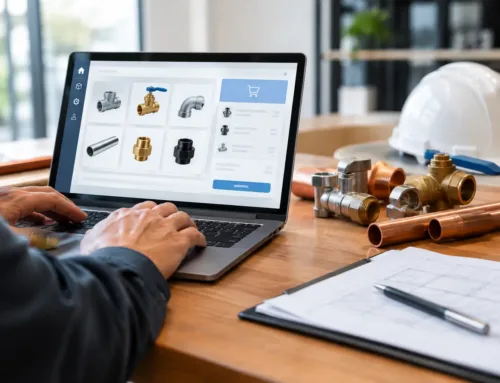
A pipe run can be fully laid out, labor can be scheduled, and fixtures can be waiting for trim-out – yet the work stops over one missing reducer, transition coupling, or approved valve connection. Pipe fittings are small compared with pumps, heaters, and fixture packages, but they control how a commercial plumbing system is assembled, tested, inspected, and maintained. For contractors, manufacturers, and public-sector buyers, selecting them correctly is not a catalog exercise. It is a schedule and compliance decision.
Pipe Fittings Start With the System, Not the Shelf
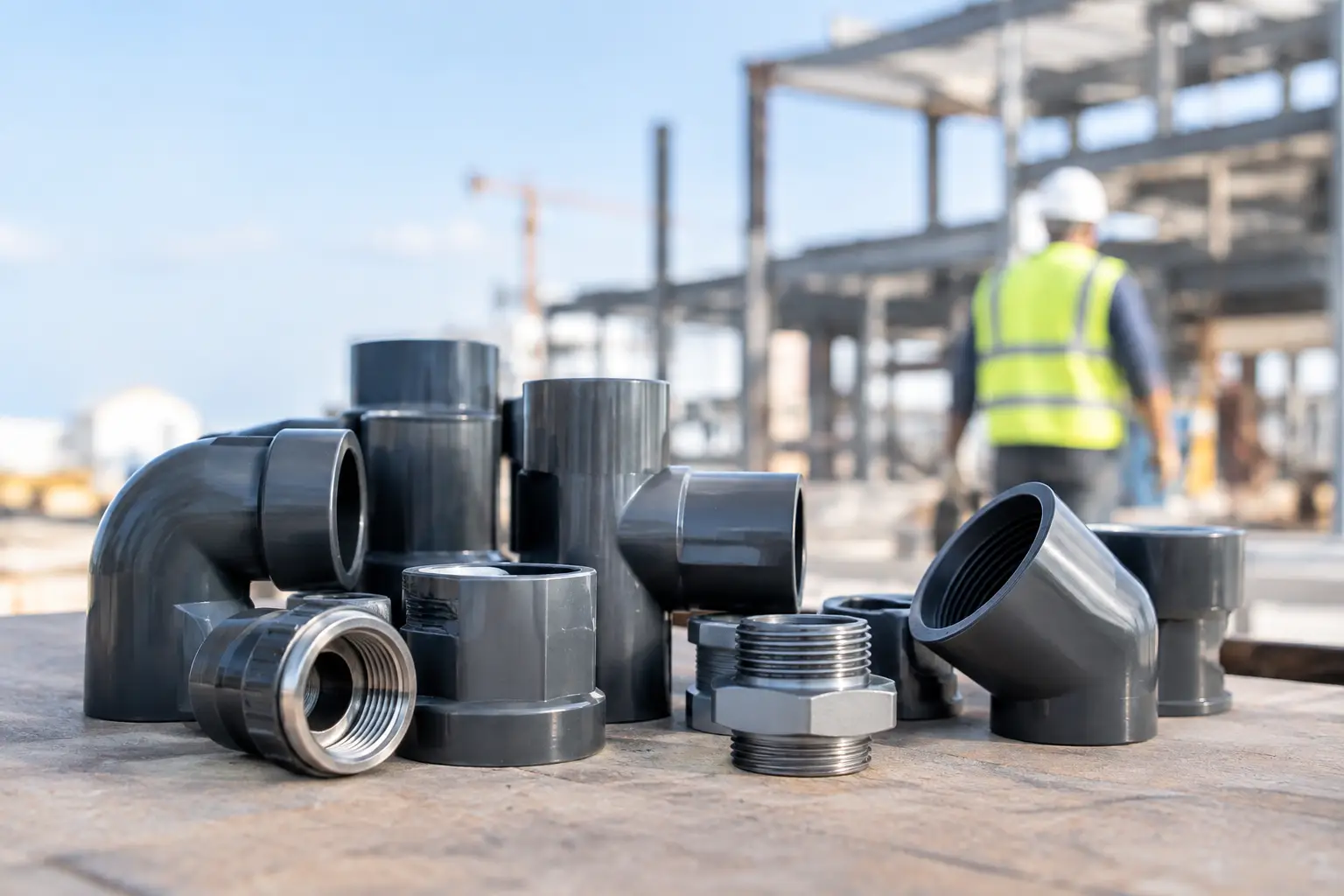
The right fitting is determined by the pipe material, service conditions, joining method, applicable code, and project specification. A 2-inch elbow may look interchangeable at a glance, but a copper press elbow, a solder end elbow, a grooved steel elbow, and a threaded malleable iron elbow belong to different installation methods and perform differently in the field.
Start with the piping system and what it carries. Domestic cold water, hot water recirculation, sanitary waste, storm drainage, hydronic water, compressed air, and specialty process services can have very different material and temperature requirements. That distinction becomes more consequential in institutional work, healthcare facilities, schools, military construction, and modular production, where specification deviations may be caught during submittal review or inspection.
Material compatibility is the first checkpoint. Copper fittings are common in domestic water systems because they pair with copper tube and support proven solder, brazed, and press connections. PVC and CPVC fittings serve distinct temperature and chemical-use ranges, so they should not be treated as substitutes. Cast iron remains a standard choice for many commercial no-hub drainage applications. Carbon steel, stainless steel, brass, and engineered plastic each have their place depending on the service, environment, and governing specification.
Mixed-material connections require extra attention. Transition fittings and dielectric unions may be necessary where dissimilar metals meet. The concern is not only whether the parts physically connect. It is whether the connection protects against galvanic corrosion, satisfies the engineer’s design intent, and remains serviceable over the life of the installation.
Match the Connection Method to Field Conditions
Connection method affects labor, fire-watch requirements, access constraints, testing, and long-term maintenance. It also affects what must be included in the material release. A fitting package that omits the correct coupling, gasket, press adapter, or flange component creates an avoidable field delay.
Soldered and brazed copper systems remain familiar to many mechanical crews, particularly where specifications require them. They demand clean preparation, trained installation, and safe hot-work practices. In occupied facilities or controlled environments, hot work can add coordination steps that affect the installation sequence.
Press fittings can reduce installation time and eliminate open-flame joining, but they must match the approved pipe system and manufacturer requirements. The correct jaw profile, sealing element, pressure rating, and application limitations matter. Press is not automatically the best option in every system; the project documents, owner standards, and available labor practices still govern.
Threaded fittings are common in smaller-diameter steel piping and certain equipment-room applications. They can be practical for serviceable connections, but thread engagement, sealing method, and corrosion protection all deserve attention. Grooved fittings offer speed and flexibility on larger mechanical piping, provided the correct groove dimensions, couplings, gaskets, and pressure ratings are coordinated.
For drainage, no-hub couplings must be specified for the pipe system and jurisdictional requirements. A basic coupling may be appropriate in one location while a shielded, heavy-duty, or mission-specific coupling is required elsewhere. Do not allow a generic description such as “cast iron coupling” to stand in for the actual approved item.
Verify Ratings Before Material Is Released
Size alone is not enough to identify a fitting. Commercial buyers should verify pressure and temperature limits, schedule or wall-thickness compatibility where applicable, end connections, and the service for which the fitting is listed. This is particularly important at water heater connections, recirculation loops, pressure-reducing stations, pump assemblies, and other locations where operating conditions can be more demanding than the main distribution line.
Nominal pipe size can also cause confusion across materials. Copper tube size, iron pipe size, and plastic-pipe dimensions do not always align in the way a rushed order entry suggests. An adapter that sounds correct may not fit the specified tubing or pipe without a transition component. Confirm the exact designation on the drawings, the specification, and the manufacturer’s data.
Code requirements are another reason to avoid substitutions made only on availability. Listed products, lead-free requirements for potable water, fire-rating considerations for penetrations, seismic restraint details, and local amendments can all influence the acceptable fitting or assembly. For government and Milcon work, buyers may also need to verify domestic-source requirements, approved manufacturers, and documentation before procurement.
Build a Complete Fitting Takeoff
Fittings are frequently undercounted because drawings emphasize the main pipe route. Every directional change, branch, change in diameter, valve connection, equipment connection, and termination adds components. In prefabrication and modular-building workflows, the consequences are amplified: a missing fitting can hold up an entire assembly rather than one section of field pipe.
A reliable takeoff separates fittings by system, material, size, and joining method. It also identifies specialty items early, including dielectric transitions, repair couplings, union connections, cleanout components, flange adapters, expansion provisions, and caps or plugs needed for pressure testing. Counting only tees, elbows, and reducers will not produce a field-ready release.
For larger or regulated projects, the material package should be checked against four practical questions:
- Does each fitting match the scheduled pipe material and connection method?
- Are pressure, temperature, listing, and code requirements supported by manufacturer data?
- Are all companion components included, such as gaskets, couplings, flanges, fasteners, or press adapters?
- Can the order be organized by phase, area, or assembly so crews receive usable material rather than a mixed shipment?
That last point matters. A complete fitting package delivered too early to the wrong area can be nearly as disruptive as a shortage. Jobsite staging, prefabrication sequence, and theft exposure should influence how material is released.
Documentation Is Part of the Product
On a simple commercial service call, the required information may be limited to size, material, and availability. On a school, federal facility, hospital, or military project, the documentation path is often more demanding. Submittals may need manufacturer cut sheets, model identification, material descriptions, compliance statements, and approval tracking before material can be installed.
This work should begin before an urgent order is placed. When a fitting is tied to an approved piping system or specified manufacturer, changing it at the last minute can trigger review delays. The lower unit price of an alternative means little if the substitution is rejected after the crew has moved on to another area.
A supply partner should be able to help distinguish a routine replenishment request from a project-controlled procurement item. Clarke Plumbing Specialties works with buyers who need both: fast-moving jobsite material and the documentation discipline required for regulated project procurement. The goal is to get the correct material to the right work area with the records needed for approval, inspection, and closeout.
Plan for Availability Without Compromising the Spec
Availability affects fitting choices, especially when a project has multiple sizes, materials, or specialty transitions. Standard elbows and couplings may be readily available while an uncommon reducer, large-diameter press fitting, stainless adapter, or specified no-hub coupling has a longer lead time. Identifying these exceptions early gives procurement teams options before the critical path is exposed.
Sometimes the answer is to release long-lead fittings ahead of bulk pipe. In other cases, an approved alternate manufacturer or connection method may protect the schedule. That decision should be made with the engineer, contractor, and owner requirements in view, not by substituting a part that merely looks similar.
The best fitting order is not simply the lowest-cost cart. It is the order that arrives complete, meets the specification, installs with the crew’s planned method, and clears inspection without rework. When every connection has been considered before the material release, pipe fittings stop being the small items that interrupt production and become the components that keep the work moving.