A backflow preventer replacement can look like a routine maintenance item until the assembly is buried above a ceiling, tied to a critical water service, or holding up a final inspection. For commercial contractors and facility teams, the work starts well before the shutdown: confirm the hazard, identify the approved assembly, verify connection details, and make sure the replacement can be tested and documented when it is installed.
A correct replacement protects the potable water system. A well-planned replacement also protects labor hours, occupancy schedules, production output, and closeout dates.
Start With the Existing Assembly, Not a Catalog Search
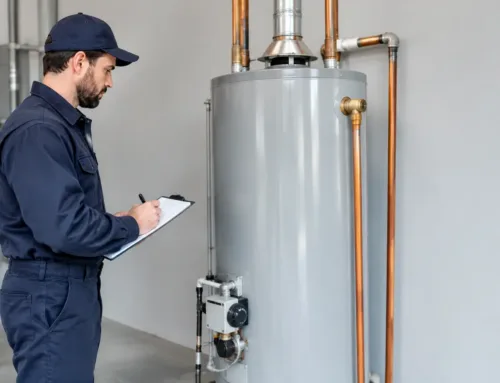
The fastest way to order the wrong backflow device is to select by nominal pipe size alone. Before sourcing material, capture the existing assembly’s manufacturer, model, size, orientation, end connections, pressure rating, and installation location. Photograph the nameplate and surrounding piping if possible. A field photo often identifies details that are missing from an old equipment schedule.
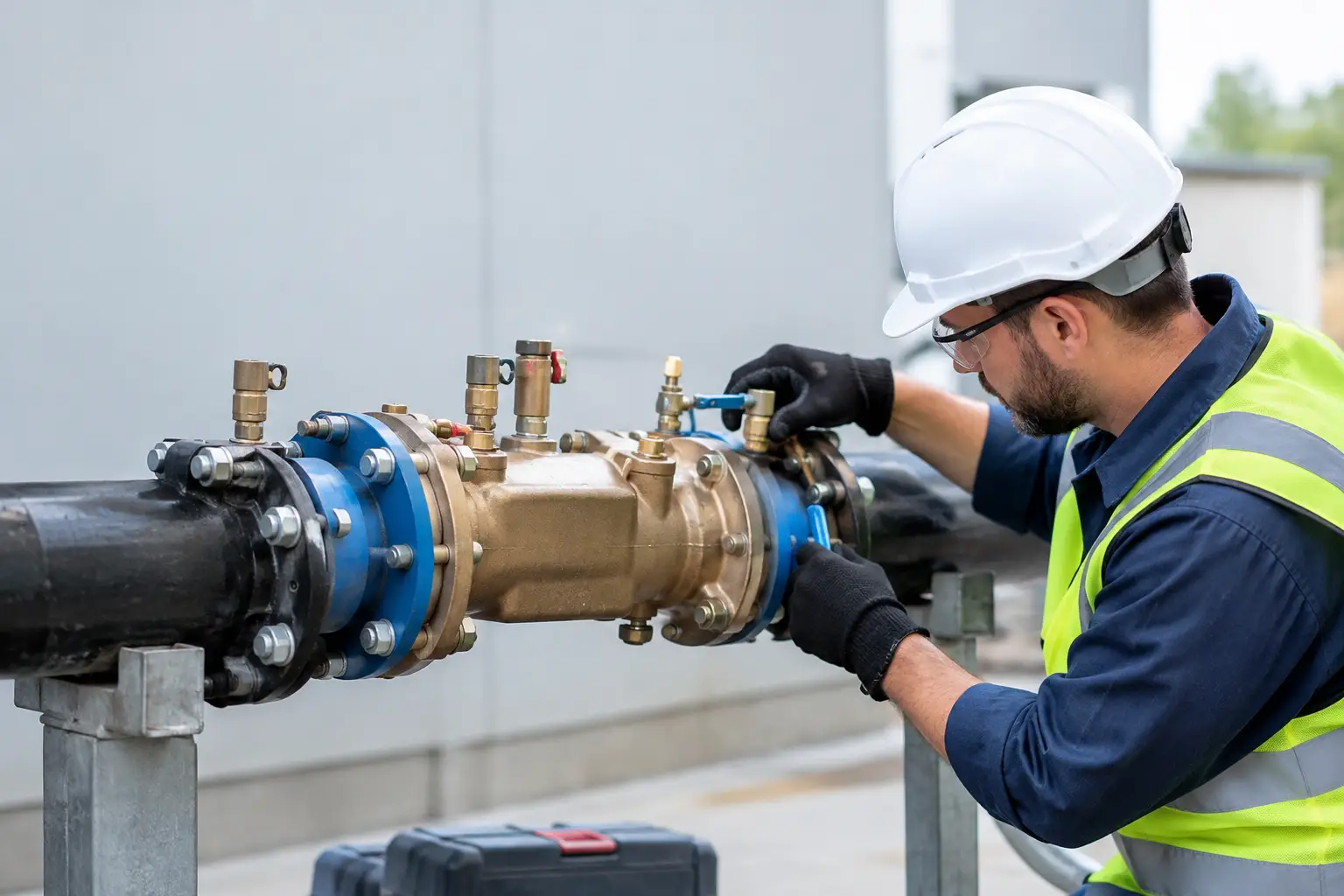
The assembly type matters just as much as its size. A reduced pressure principle assembly, double check valve assembly, pressure vacuum breaker, spill-resistant vacuum breaker, or atmospheric vacuum breaker is not interchangeable simply because it serves a similar area of the building. The degree of hazard, local authority requirements, and the conditions of installation determine what is acceptable.
For example, a double check assembly may be suitable for a non-health-hazard condition where a reduced pressure assembly is required for a higher-hazard application. A pressure vacuum breaker has installation limitations that may make it unsuitable where the piping arrangement or downstream pressure does not meet manufacturer requirements. Replacing an assembly with a different device type without approval can create an inspection failure, even if the unit physically fits the pipe.
Confirm Code, Authority, and Owner Requirements
Backflow protection is governed by more than a national plumbing code reference. The local water purveyor, authority having jurisdiction, project specifications, and owner standards can each affect the acceptable assembly. Many commercial facilities also maintain approved-manufacturer lists or require consistency with existing campus inventory.
Before releasing a purchase order, confirm whether the project requires an assembly listed by the relevant testing and certification organizations, approved by the local water authority, or furnished with a specific lead-free designation. Government and military work may add submittal, domestic sourcing, or product-approval requirements that need to be addressed before material reaches the site.
This is where documentation should be treated as part of the material package, not an afterthought. Product data, certification information, installation instructions, repair information, and submittal sheets should match the assembly actually being supplied. A substitution that looks equivalent on a cut sheet can still create a problem if its approvals, dimensions, or service requirements differ from the specified unit.
Measure the Installation Envelope
A commercial backflow preventer replacement succeeds or fails on the details around the device. Verify the available face-to-face space, pipe centerline elevation, valve location, drain clearance, and access route for removing the existing assembly. Large assemblies are heavy and may require clearance for lifting equipment, floor protection, or coordinated access through a mechanical room.
Also review the condition of adjacent isolation valves, unions, flanges, supports, and strainers. If upstream and downstream valves will not hold, a simple replacement becomes a broader shutdown scope. If the existing piping has corrosion, misalignment, or inadequate support, forcing a new assembly into the old layout can damage check modules, shutoff valves, or test cocks.
Drainage deserves the same attention. Relief discharge from a reduced pressure assembly must be managed in accordance with the installation requirements and applicable code. A floor drain that is undersized, blocked, or located too far from the assembly can turn a normal test event into a facility issue. In exterior installations, account for freeze protection, enclosure condition, access panels, and drainage around the vault or enclosure.
Build the Material Package Around the Replacement
Ordering only the backflow assembly is often not enough. The required package depends on the existing installation, but it may include shutoff valves, companion flanges, gaskets, bolt sets, grooved couplings, transition fittings, unions, repair kits, test-port caps, pipe supports, insulation, and enclosure components.
For a planned outage, it is usually prudent to stage common service parts as well. Check assemblies contain internal components that can reveal wear only after isolation and disassembly. If the project scope includes rebuilding rather than full replacement, confirm that the correct check, relief valve, rubber kit, or complete repair kit is available for the exact model and size. Similar-looking kits are not a safe field substitute.
Lead times can vary considerably by assembly type, size, connection style, and manufacturer. Large-diameter or specialty approved devices may not be available as quickly as standard commercial sizes. Procurement teams should identify the critical assembly early, especially where the device is tied to a domestic service, fire protection interface, process water system, medical facility, school, or occupied government building.
Clarke Plumbing Specialties can support this process by helping customers verify available commercial options, assemble supporting material, and organize documentation needed for project review. The goal is not simply to ship a device. It is to help the contractor receive a workable, approvable replacement package.
Plan the Shutdown and Testing Sequence
The installation window needs to include more than removal and piping work. Coordinate building users, water service interruption notices, bypass requirements, restoration procedures, and testing availability before the crew arrives. In a hospital, school, manufacturing plant, barracks, or multi-tenant facility, a poorly timed shutdown can affect far more than the mechanical room.
After installation, the assembly must be tested by a qualified tester where required by the local authority. Schedule that testing in a sequence that allows for adjustment, repair, or replacement if the device does not pass. Do not leave certification until the end of a compressed closeout period.
The installer should also confirm the assembly is accessible for future testing, maintenance, and reading of identification information. A device that passes on day one but is blocked by ductwork, ceilings, stored equipment, or an inaccessible enclosure will create avoidable service cost later. Accessibility is part of a durable installation, not a cosmetic preference.
When Repair May Be Better Than Replacement
Full replacement is not always the lowest-risk decision. If the body, shutoff valves, and connections are in sound condition, an approved repair kit and certified field testing may restore an assembly at lower material cost and with less piping disruption. This can be a practical option when the replacement footprint would require extensive rework or when the existing assembly is still supported by the manufacturer.
However, repair has limits. Severe corrosion, damaged body components, repeated test failures, obsolete internal parts, leaking shutoffs, or a device that no longer meets current application requirements can make replacement the more responsible choice. Evaluate labor, outage duration, availability of repair parts, and expected remaining service life together. The least expensive material line item is not always the least expensive project outcome.
Keep Records That Support the Next Service Call
At turnover, record the manufacturer, model, size, serial number if applicable, installation date, test results, and any authority documentation. Retain the product data and repair information with the facility’s maintenance records. For contractors, this information supports closeout. For facilities teams, it makes the next annual test, repair, or replacement decision faster and more accurate.
The right backflow preventer replacement is the one that fits the hazard, the approved specification, the physical installation, and the project’s schedule. Confirm those four points before material is released, and the replacement is far more likely to move from shutdown to certification without another trip, another delay, or another question at inspection.