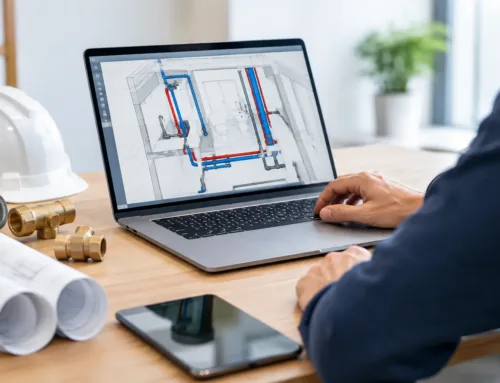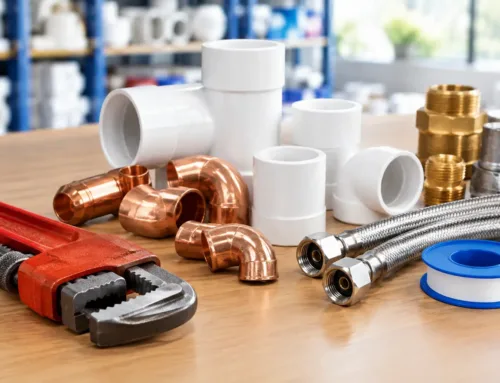
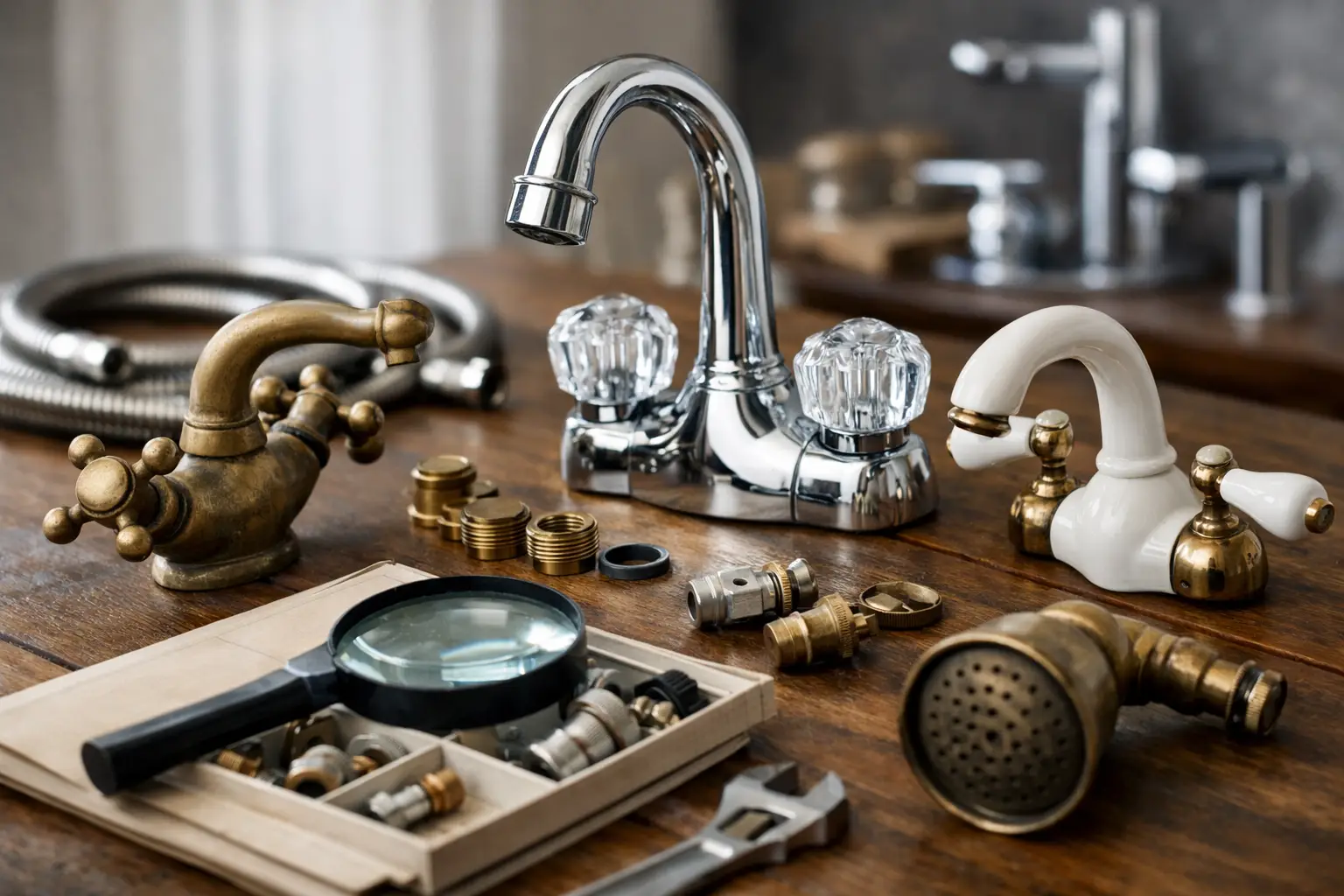
A discontinued fixture becomes a project problem long before anyone calls it obsolete. It can hold up a tenant improvement, stop a modular production line, delay a repair in an occupied facility, or force a redesign after submittals have already been approved. Knowing how to source discontinued plumbing fixtures is not just about finding old inventory. It is about protecting fit, function, code compliance, appearance, and the project schedule.
For commercial buyers, the first available replacement is rarely the right answer. A substituted drinking fountain, flush valve, hand dryer, shower component, drain, or water heater may affect rough-in dimensions, electrical requirements, ADA clearances, finishes, replacement parts, or agency approval. The fastest path is a controlled sourcing process that starts with accurate identification and ends with documented acceptance.
Start With the Exact Product Identity
The model number is the best starting point, but it should not be the only information provided. Manufacturers revise model suffixes, finishes, voltages, trim configurations, and compliance packages over time. A base model number can identify a product family while leaving out the details that determine whether the material will actually work.
Before requesting a search, gather the manufacturer name, full model number, serial number when applicable, and clear photographs of the fixture and identification label. Include the installation location, quantity required, and the date material is needed on site. For installed equipment, photos of connections, wall openings, mounting conditions, and adjacent components are often as valuable as the nameplate.
The original cut sheet, approved submittal, purchase order, or closeout record can resolve questions that a field photo cannot. This is particularly true for bottle filling stations, electric water heaters, institutional shower systems, commercial lavatory fixtures, and specialty drains, where a small variation can change the installation requirement.
A complete request also tells the supplier whether the need is a direct replacement, a repair part, a matching fixture for an expansion, or a project-specific approved item. Those are different sourcing assignments. A replacement for a failed unit may allow a current equivalent. Matching fixtures in a public washroom or modular assembly may require a much narrower solution.
Source Discontinued Plumbing Fixtures Through the Right Channels
Discontinued material is often still available, but not always through the standard catalog path. It may exist as factory inventory, distributor stock, an unused project surplus, a manufacturer service part, or a current model that uses the same internal assembly. The search should follow the product category and the operational risk, not simply a broad web search.
For fixtures and equipment with a defined manufacturer lineage, begin by determining the official disposition of the original item. Was it discontinued with a direct successor? Is it temporarily unavailable? Was the product replaced by a revised model using the same rough-in? Are repair parts still supported? The answers change both the lead time and the acceptable replacement strategy.
Established commercial manufacturers frequently retain parts support after a full fixture is discontinued. A failed sensor, bubbler, cartridge, solenoid, actuator, heating element, drain grate, or valve assembly may be replaceable without changing the complete unit. That is often the lowest-risk option when the existing fixture remains code-compliant and the surrounding installation is intact.
When complete replacement is necessary, a qualified wholesale supplier can search manufacturer channels, regional inventory, and available commercial stock while screening for condition, configuration, and documentation. Material that looks identical may not be identical. Verify whether an item is new, unused surplus, returned stock, refurbished equipment, or a service assembly before it is committed to a project.
Do not assume that older stock is automatically a safe purchase. Packaging can conceal missing trim, outdated electrical components, damaged finishes, or incomplete mounting hardware. For any schedule-critical order, confirm what is physically included and whether the item carries the required approvals and warranty status.
Verify the Replacement Before Ordering
A discontinued fixture should be evaluated as a substitution, even when it appears to be a close match. The goal is to prevent the familiar jobsite sequence: material arrives, the installer finds a connection mismatch, and the project loses another week waiting for adapters, revised trim, or approval.
Check physical and utility compatibility
Compare rough-in dimensions, mounting centers, overall dimensions, water connections, drain outlets, electrical voltage, amperage, and control requirements. For wall-mounted equipment, verify backing, carrier compatibility, wall opening size, and finished-floor elevations. For floor-mounted fixtures, confirm footprint, waste location, supply location, and clearance requirements.
A replacement drinking fountain or bottle filler may have a different power requirement, refrigeration configuration, filter arrangement, or ADA installation height. A commercial water heater may change electrical load, recovery capacity, relief valve location, or piping orientation. A drain body that fits the opening may still have an incompatible outlet, grate load rating, membrane connection, or strainer configuration.
Check performance and compliance requirements
Current products may meet standards that did not apply when the original fixture was installed, but that does not eliminate the need for review. Confirm flow rates, temperature-control requirements, ASSE or ASME listings, NSF requirements where applicable, accessibility criteria, and local code conditions.
For public-sector work, the documentation burden can be just as significant as the material search. A replacement may require updated data sheets, manufacturer certifications, country-of-origin information, sustainability data, or a formal substitution request. Milcon and government projects can have additional procurement, approval, and specification requirements. A part that is technically compatible can still be unusable if it cannot be properly documented and approved.
Check visual and operational consistency
Finish, style, sensor behavior, user interface, and maintenance procedures matter in occupied facilities. A single replacement hand dryer that differs from the others may be acceptable in a service corridor but not in a public-facing renovation. A flushometer with a revised sensor platform may require staff training or different maintenance stock.
This is where the project context matters. A facility repair often prioritizes restoring service quickly. A hotel, school, healthcare, government, or institutional project may need matching appearance, standardization, and long-term parts availability. State the priority early so the sourcing effort is aimed at the right outcome.
Avoid the Common Procurement Delays
The most costly delays occur when sourcing begins after the field has already removed the failed item or after the installer is scheduled. Put discontinued and end-of-life items on the procurement risk list as soon as they appear in a survey, renovation scope, or bill of materials.
For recurring facility repairs, maintain a record of legacy equipment by building and location. Include model numbers, installation dates, common service parts, and any approved replacements. This gives maintenance teams a practical path forward when a fixture fails and helps purchasing avoid starting from zero every time.
For construction and modular manufacturing, identify long-lead, discontinued, and sole-source items before release. If an original fixture is still available in limited quantities, secure the full project requirement rather than buying only the immediate need. Partial availability can create an appearance mismatch, split submittal issue, or production interruption later in the schedule.
It is also wise to separate “acceptable equivalent” from “field-fit equivalent.” A product may satisfy the specification but require wall changes, piping modifications, electrical revisions, or a different carrier. Those labor impacts should be visible before the purchase decision, not discovered during installation.
Give Your Supplier Enough Information to Move Fast
Urgent requests move faster when they arrive with a clear decision framework. Identify whether an exact match is mandatory, whether a manufacturer-approved successor is acceptable, and whether a documented substitution can be considered. State the required delivery date and whether partial shipments help or create a problem.
For government and regulated work, provide the applicable specification section, approved submittal, and any agency requirements with the initial request. For repair work, include photos and measurements from the field. This allows the sourcing team to screen options before presenting them, rather than sending a list of possibilities that still require days of review.
Clarke Plumbing Specialties works this way because a difficult material request is rarely just a purchasing task. It is usually tied to labor, inspections, production timing, and a commitment someone has already made to the owner or end user.
When an older fixture becomes unavailable, the right response is not to gamble on a look-alike. Build the request around exact identification, verified compatibility, and the approvals the project requires. That gives the field team material they can install with confidence, not another issue waiting at the loading dock.